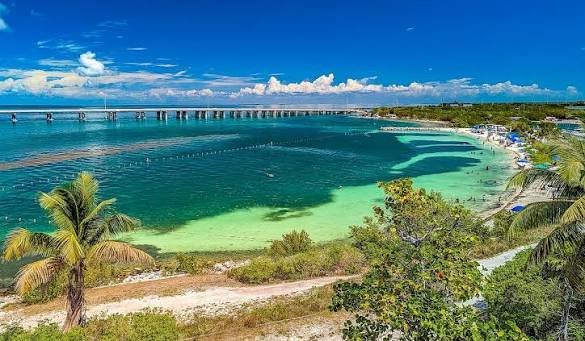
The stone that built the Castillo de San Marcos, the 17th-century Spanish fortress still standing in downtown St. Augustine, came from right here. Anastasia State Park sits atop a historic coquina quarry, and centuries later, that same stretch of coastline has become one of Florida’s most consistently ranked beaches, four miles of soft, reddish-white sand with no high-rises, no beachfront bars, just dunes, sea oats, and genuinely wild coastline. It’s also one of the harder parks in Florida’s system to get into on a summer weekend without planning ahead.
Here’s what to know about fees, parking strategy, and current wildlife programs before a 2026 visit.
Anastasia State Park Overview
|
Detail |
Information |
|
Location |
Anastasia Island, St. Augustine, FL 32080 |
|
Park hours |
8 a.m. until sundown, 365 days a year |
|
Vehicle entrance fee |
$8 (up to 8 people); $4 single-occupant; $2 pedestrians/cyclists |
|
Beach length |
Over 4 miles |
|
Park size |
About 1,600 acres |
|
Lifeguard coverage |
Memorial Day through Labor Day |
|
Camping |
139 sites, electricity/water/picnic table/grill/fire ring included |
|
Camping fee |
$28/night plus $6.70 reservation fee; $7 utility fee (not tent camping) |
|
Camping reservation window |
Up to 11 months in advance |
|
Historic significance |
Former coquina quarry — source of stone for Castillo de San Marcos |
|
Pet policy |
Prohibited on beaches, in buildings, and on boardwalks |
Why Parking Fills by Mid-Morning
This is the single most important logistical detail for a summer visit. Anastasia is genuinely one of the harder Florida state parks to get into after mid-morning during peak season; arriving after 10 a.m. on a summer weekend commonly means finding a “Lot Full” sign and a line of cars backed up along the entrance road. Given the park’s reputation, ranked among the country’s best beaches by multiple national outlets in recent years, this isn’t a rare occurrence but a predictable pattern.
If a summer weekend visit is unavoidable, arrive at or shortly after the 8 a.m. opening rather than planning a leisurely late-morning start. Weekday visits, or trips scheduled for spring and fall shoulder seasons, offer considerably more breathing room if your schedule allows that flexibility.
Understanding the Fee Structure
Anastasia’s entrance fee scales by vehicle occupancy rather than a flat per-person rate: $8 covers a vehicle with up to 8 people, dropping to $4 for a single-occupant vehicle, while pedestrians and cyclists pay just $2 each. This structure rewards carpooling and group visits, since a full vehicle of eight people pays the same $8 as a car with just two or three occupants.
Camping runs separately from day-use admission, at $28 a night plus a $6.70 reservation fee, with an additional $7 nightly utility fee for RV and similar hookup sites (tent camping skips this utility charge). Given the campground’s popularity, especially with its short walk to the beach through maritime hammock, booking as early as the 11-month advance window allows is a smart move for anyone with specific summer or fall foliage-adjacent dates in mind.
The Coquina Quarry: A Direct Line to St. Augustine’s History
Long before Anastasia became a beach destination, this site served as a working coquina quarry, and the stone extracted here went directly into building the Castillo de San Marcos, the Spanish fortress that still stands watch over St. Augustine’s harbor. Coquina, a sedimentary rock formed from compacted shell fragments, proved remarkably resilient in fortress walls partly because its porous structure could absorb cannonball impacts without shattering the way more brittle stone would.
Walking the park’s trails and shoreline today, it’s worth remembering that this landscape isn’t just scenic, it’s directly tied to one of the oldest surviving European fortifications in the continental United States, a detail that adds real context for visitors interested in the region’s colonial history alongside its natural beauty.
Wildlife: What to Watch For and When
Anastasia supports a genuinely broad range of coastal wildlife thanks to its mix of beach, tidal marsh, and maritime hammock habitats. Along Salt Run, wading birds including roseate spoonbills hunt for food, while osprey and eagles patrol the skies above. The hammock forests host painted buntings and warblers, and gopher tortoises regularly cross the park’s walking paths. Piping plovers frequent the marshland areas, particularly worth watching for near the Ancient Dunes Nature Trail.
The park runs regular guided birding walks in 2026, typically running 8:15 to 10 a.m. on select dates throughout the summer, part of the Great Florida Birding and Wildlife Trail. These volunteer-led walks cover the beach, boardwalks, and trails, offering a structured way to spot species you might otherwise miss on a self-guided visit. One practical warning worth heeding: local raccoons and birds are notoriously bold around unattended food, so don’t leave snacks unwatched on a picnic table or kayak.
Pets: A Stricter Policy Than Some Nearby Parks
Unlike some other Florida coastal parks that allow leashed dogs throughout much of the property, Anastasia prohibits pets on the beaches, in buildings, and on the boardwalks entirely. If you’re planning a beach day with your dog specifically, this park’s restrictions are tighter than you might expect, so check current policy for any non-beach areas if bringing a pet is part of your plan, and consider that the beach itself simply isn’t an option regardless of leash use.
Watersports and the Ancient Dunes Trail Alternative
For visitors wanting more than a standard beach day, Anastasia Watersports operates a rental concession offering kayaks, paddleboards, and sailboats, along with paddles, life jackets, and dry bags, with the last rental typically going out an hour before the park closes. Salt Run, the sheltered tidal area on the park’s western side, offers calmer water for kayaking than the open Atlantic beach, and it’s a favorite spot for spotting dolphins and sea turtles from the water.
On days when beach wind makes for an uncomfortable sunbathing experience, the Ancient Dunes Nature Trail offers a solid alternative, winding through maritime hammock and dune habitat away from direct coastal wind exposure. Bug spray is genuinely essential here during warmer months, since the dense hammock traps humidity and creates ideal mosquito conditions.
Frequently Asked Questions
What time should I arrive to guarantee parking during summer?
Arriving at or right around the 8 a.m. opening is the most reliable strategy during peak summer season. Arriving after 10 a.m. on a summer weekend frequently means encountering a full parking lot and a wait, so early arrival isn’t optional if a specific weekend date matters.
Can I bring my dog to the beach here?
No. Pets are prohibited on the beach, in buildings, and on boardwalks throughout the park. If a dog-friendly beach day is your priority, this specific policy makes Anastasia a poor fit for that particular plan.
Is there lifeguard coverage year-round, or only in summer?
Lifeguards are on duty from Memorial Day through Labor Day. Outside that window, swimming is at your own risk without staffed lifeguard supervision.
What should I do if the beach is too windy to enjoy comfortably?
The Ancient Dunes Nature Trail offers a sheltered alternative through maritime hammock and dune habitat, away from direct coastal wind. It’s also a strong option for spotting gopher tortoises and other wildlife you might miss on the open beach.