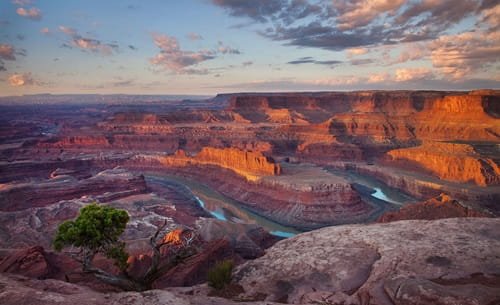
At roughly 120 miles long and up to 1,000 feet deep, Palo Duro Canyon holds the title of the second-largest canyon in the United States, trailing only the Grand Canyon itself. Most people don’t expect something this dramatic tucked into the flat Texas Panhandle just southeast of Amarillo, which is exactly why it earns the “Grand Canyon of Texas” nickname. But this is also a canyon with real summer heat risk, active trail closures tied to weather advisories, and a hunting season that shuts down parts of the park entirely each December.
Here’s what to check before you plan a 2026 trip.

Palo Duro Canyon State Park Overview
| Detail | Information |
| Location | About 25 miles southeast of Amarillo, near Canyon, TX |
| Park size | Over 25,000 acres |
| Canyon dimensions | Roughly 120 miles long; up to 1,000 feet deep |
| Day-use fee | $8 per person, ages 13+ |
| Office hours | 7:30 a.m. to 5:30 p.m. daily |
| Scenic drive | 16 miles, paved, suitable for standard vehicles and most RVs |
| Trail mileage | Over 30 miles for hiking, biking, and horseback riding |
| Signature landmark | Lighthouse Peak, a 300-foot rock formation reached via the Lighthouse Trail |
| Heat advisory trail closures | Lighthouse, Comanche, Givens-Spicer-Lowry, and Rock Garden trails close 11 a.m.–5 p.m. on NWS heat advisory days |
| Annual hunt closure | Old West Stables area and backcountry buffer zones close for roughly two weeks in December |
Heat Safety: Why Trails Close Mid-Day in Summer
This is the detail most visitors miss until they’re standing at a closed trailhead. The canyon floor runs consistently 5 to 10 degrees hotter than the rim above it, and on days when the National Weather Service issues a heat advisory, the park proactively closes four of its most popular trails, Lighthouse, Comanche, Givens-Spicer-Lowry, and Rock Garden, from 11 a.m. to 5 p.m. This isn’t a suggestion; it’s an enforced safety closure, and showing up mid-afternoon on a hot summer day expecting full trail access can mean a wasted trip if you didn’t check conditions first.
The safest strategy is to hike early, ideally starting before 9 a.m. in summer months, carry at least one liter of water per person per mile, and hike with a companion rather than solo. Given that July average highs run around 92°F and the canyon floor amplifies that heat further, this isn’t overly cautious advice — it reflects genuine risk in an exposed, shadeless landscape.
The Lighthouse Trail and What to Expect
The park’s most iconic hike leads to Lighthouse Peak, a distinctive 300-foot rock formation that’s become the visual symbol of Palo Duro Canyon. The trail itself is one of the four subject to heat-advisory closures, so timing matters twice over here: once for comfort, and once because the trail may simply be closed if you arrive during a mid-day advisory. Sturdy hiking boots with good ankle support are worth having, since the terrain includes steeper, rockier sections that punish casual footwear.
Beyond Lighthouse Trail, the park’s broader network exceeds 30 miles, open to hikers, mountain bikers, and horseback riders depending on the specific trail, giving visitors options that don’t all funnel through the same heat-restricted routes.
The Scenic Drive: An Easier Way to See the Canyon
Not every visitor wants or needs to hike into the canyon floor to appreciate its scale. A 16-mile paved scenic drive winds from the rim down into the canyon and back, suitable for standard passenger vehicles and most RVs, offering sweeping views of the red clay formations and canyon walls without requiring any hiking at all. This is a strong option for visitors with mobility limitations, families with very young kids, or anyone simply short on time who still wants to take in the canyon’s scale.
The December Hunt Closure You Should Know About
If you’re planning a winter visit, one detail is worth flagging specifically: the park closes the Old West Stables area and backcountry buffer zones, including the equestrian area and backcountry hiking and camping, for roughly two weeks each December to accommodate a scheduled hunt. During this window, only the CCC and Triassic Trails remain accessible, while the Rim Cabins, Visitor Center, scenic overlook, and other developed facilities stay open as normal. If backcountry hiking or horseback riding is central to your December trip, check the current year’s exact closure dates before booking, since they shift slightly year to year.
Frequently Asked Questions
Q1. How do I know if a heat advisory is in effect before I arrive?
Check the National Weather Service forecast for the Amarillo/Canyon area, or call the park directly, before heading out on a summer day. If an advisory is active, plan your hike for before 11 a.m. or after 5 p.m. rather than risking a closed trailhead mid-visit.
Q2. Can I bring my dog into the park and onto the trails?
Yes, dogs are welcome throughout the park on a leash, including most trails. They’re generally not permitted inside the historic cabins or the amphitheater during performances, so plan accordingly if your itinerary includes either of those.
Q3. Is the park still worth visiting if trails are closed for a heat advisory?
Yes. The 16-mile scenic drive remains open regardless of trail closures and offers substantial canyon views from your vehicle. Many visitors combine an early-morning hike before the heat advisory closure window with an afternoon scenic drive to see more of the park without exposure risk.
Q4. Do I need a reservation to guarantee entry, or can I just show up?
The park frequently reaches capacity, especially on weekends and holidays, so purchasing a day pass in advance is strongly recommended if you want guaranteed entry rather than risking a walk-up closure at the gate.