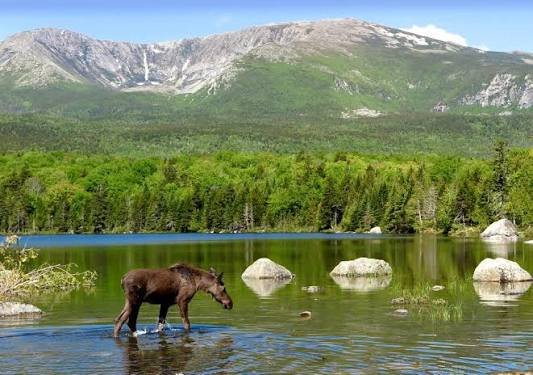
There are no paved roads inside Baxter State Park’s 200,000 acres, no electricity, no standard campground amenities, and a hard 20 mph speed limit throughout. This is deliberate: Governor Percival Baxter donated the land specifically to be kept “forever wild,” and today it’s home to Mount Katahdin, Maine’s tallest peak and the northern terminus of the Appalachian Trail. Getting to hike it, though, requires navigating a genuinely strict reservation system, and peak summer slots for both campsites and trailhead parking routinely sell out within minutes of opening.
Here’s what to know about the Katahdin Trailhead Pass, campground booking, and current park rules before your 2026 visit.
Baxter State Park Overview
| Detail | Information |
| Location | Millinocket, ME (Visitor Center: 64 Balsam Dr) |
| Park size | About 200,000 acres |
| Mount Katahdin height | 5,267 feet — Maine’s tallest peak |
| Entrance fee | $20/vehicle (non-Maine residents); free for Maine residents with ME ID |
| Katahdin Trailhead Pass (KTP) | $10/vehicle, required June–October for day hikers not camping the night before |
| Gate hours | 6 a.m.–10 p.m. (summer); 6 a.m.–5 p.m. (late fall) |
| Campground reservation window | Rolling, opens 4 months in advance |
| Online booking limit (2026 policy) | Up to 4 consecutive nights |
| Maximum stay | 7 nights per site; 14 nights park-wide |
| Vehicle restrictions | Max length 22 ft, height 9 ft; no motorcycles, ATVs, e-bikes, or drones |
The Katahdin Trailhead Pass: Who Needs One and When
This is the single most important logistical detail for anyone planning to hike Katahdin without camping in the park the night before. A Katahdin Trailhead Pass (KTP) costs $10 per vehicle and reserves your parking spot at one of the park’s three Katahdin trailhead lots, with all passengers in that vehicle covered by the single pass. This applies to anyone hiking from a Katahdin trailhead, not just those summiting Katahdin itself; trails like The Owl and South Turner Mountain, which also depart from these same lots, require the same pass if you’re not camping overnight.
If you do have a campground reservation for the night before your hike, you generally don’t need a separate KTP, the exception being if you plan to hike Katahdin on the same day your reservation begins, in which case you’ll still need a KTP for that specific day. Note that KTP reservations are capped at two per account, per calendar month, during the busy June-through-October stretch, a limit worth planning around if you’re organizing hikes for multiple groups or dates.
Campground Reservations: The Rolling 4-Month Window
Baxter operates on a rolling reservation system rather than a single fixed date when everything opens at once; campground bookings open exactly four months before your intended arrival date. For 2026, online booking is limited to a maximum of four consecutive nights per reservation, a new policy this year, while backcountry sites, bunkhouses, and group areas must be booked by phone or mail directly with the park office (207-723-5140) rather than online.
Across the park, you’re limited to seven nights at any single site and 14 nights total park-wide per stay. Given how quickly July and August availability disappears, often within minutes of the four-month window opening, mark your calendar for the exact date and time your target dates become bookable, and have your account and payment information ready rather than searching for them in the moment. September offers considerably better availability alongside the bonus of fall foliage, worth considering if your hiking dates have any flexibility.
Two Entrances: Togue Pond vs. Matagamon
Baxter is accessed through two separate gates, and which one you use depends on which part of this genuinely enormous park you’re visiting. The main entrance, Togue Pond Gate, sits about 17 miles from Millinocket on a paved road and provides access to Katahdin Stream, Abol, Roaring Brook, Daicey Pond, and Kidney Pond campgrounds, essentially the hub for anyone hiking Katahdin itself. The Matagamon Gate, accessed from the town of Patten, is considerably less busy and opens onto the park’s northern wilderness, including South Branch Pond and Trout Brook Farm.
If Katahdin is your primary goal, plan on Togue Pond Gate; if you’re seeking a quieter, more remote wilderness experience away from the mountain’s crowds, the northern Matagamon side offers a genuinely different Baxter experience.
Climbing Katahdin: What the Hike Actually Demands
The most popular route to the summit, the Hunt Trail, doubles as the official Appalachian Trail northern terminus, running 5.2 miles one-way with about 4,188 feet of elevation gain, starting from Katahdin Stream Campground. Most hikers should plan for 8 to 12 hours round trip, genuinely a full-day commitment rather than a casual morning hike, with moderate terrain below treeline giving way to exposed rock scrambling above it. The Knife Edge, a 1.1-mile stretch of exposed ridgeline connecting Pamola Peak to Baxter Peak, is the mountain’s most famous and most dangerous feature, not recommended for hikers uncomfortable with serious exposure or in poor weather conditions.
Given the above-treeline exposure and Katahdin’s genuinely unpredictable mountain weather, distinct from conditions at the trailhead, pack real layers regardless of the forecast at lower elevation, and know that a headlamp or flashlight is a hard park rule for any hiker on the mountain, not just a suggestion for those expecting to finish after dark.
What’s Prohibited: A Short But Firm List
Baxter maintains a genuinely strict set of prohibitions worth internalizing before you arrive. Pets, firewood brought from outside, drones, and parties larger than 12 people are all not permitted anywhere in the park. Vehicles are capped at 22 feet in length and 9 feet in height, and motorcycles, ATVs, and e-bikes aren’t allowed on park roads at all. The 20 mph speed limit is enforced throughout, reflecting both the unpaved road conditions in many areas and the park’s wildlife-heavy character.
Alternative Access: The Marston Trailhead
If you’re looking for a Katahdin approach that doesn’t require the trailhead reservation system, the Marston Trailhead offers a genuine alternative: no reservation is needed for parking there, though you’ll still pay the standard $20 gatehouse entrance fee if you’re a non-Maine resident. Reaching it involves a roughly 40-minute drive on unpaved roads from the gate, giving you a real sense of the park’s remoteness before you even start hiking.
Frequently Asked Questions
Q1. Do I need a Katahdin Trailhead Pass if I’m camping in the park the night before my hike?
Generally no, your campground reservation covers trailhead access during your stay. The exception is if you plan to hike Katahdin on the same day your camping reservation begins, in which case you’ll still need a separate KTP for that specific day.
Q2. How far in advance can I book a campsite, and when should I try?
Reservations open exactly four months before your arrival date on a rolling basis, not a single fixed date for the whole season. For July and August dates, be ready to book the moment your specific window opens, since popular sites can sell out within minutes.
Q3. Is Katahdin too difficult for an average hiker to attempt?
It’s a genuinely serious undertaking, typically 8 to 12 hours round trip with significant elevation gain and above-treeline exposure. Reasonably fit hikers with proper preparation, layers, food, water, and a full day set aside, can complete it, but it demands real respect rather than a casual approach.
Q4. Can I bring my dog on the trails or to my campsite?
No. Pets are not permitted anywhere in Baxter State Park, a firm rule with no exceptions for trails, campgrounds, or day-use areas.