California’s largest state park doesn’t have a single entrance gate. At nearly 600,000 acres, Anza-Borrego is so vast that it’s accessible from multiple roads across all compass points, and general admission is entirely free, no fee just to drive in and explore. What you do pay for is parking at specific developed areas like the Visitor Center and popular trailheads, along with camping. Given the park’s brutal summer heat and a wildflower season that draws crowds from across Southern California each spring, timing your visit right matters as much as knowing where the fees actually apply.
Here’s what to know about seasonal timing, fees, and current desert conditions before your 2026 trip.
Anza-Borrego Desert State Park Overview
| Detail | Information |
| Location | Surrounds Borrego Springs, San Diego County, CA |
| Park size | Nearly 600,000 acres — California’s largest state park |
| Distance from San Diego | About 85 miles / 2 hours |
| Distance from Palm Springs | About 80 miles / 1.5 hours |
| General admission | Free — no entrance gate or general fee |
| Visitor Center parking | $10 per car per day |
| Developed campground fees | $15–$35/night; group sites up to $80/night |
| Primitive/dispersed camping | Free |
| Wildflower season | Late February through April, typically peaking mid-March |
| Summer temperatures | Can exceed 120°F |
| Unpaved road mileage | Over 500 miles for 4×4 exploration |
No Entrance Fee, But Parking Fees Do Apply
This is worth understanding clearly before your visit. Unlike most California state parks that charge a standard day-use entrance fee, Anza-Borrego itself has no general admission cost, since its boundaries are simply too vast and too accessible from too many directions to gate effectively. What you will pay for is parking at specific developed facilities: the Visitor Center lot runs $10 per car per day, and the popular Borrego Palm Canyon Trailhead, accessed from the end of the main campground road, carries the same $10 day-use parking fee.
If you’re simply driving through the park’s backcountry roads or hiking from an undeveloped pullout, you likely won’t encounter a fee at all. Camping, however, does carry its own separate cost structure regardless of whether general park entry is free.
Timing Your Visit: Why Season Matters More Than Almost Anywhere
This is genuinely one of the most important planning factors for Anza-Borrego. Summer temperatures here regularly exceed 120°F, making outdoor activity during June through September genuinely dangerous without serious precautions, while winter nights can drop below freezing, a dramatic swing that catches unprepared visitors off guard. The comfortable window runs October through April, with daytime temperatures generally in the 60s to 80s and cool nights well-suited to camping.
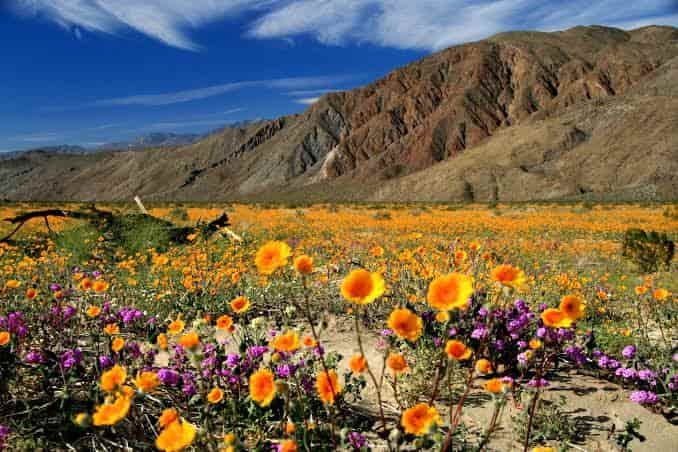
Late February through April brings the park’s other major seasonal draw: wildflower season, typically peaking around mid-March, though exact timing and bloom intensity shift year to year depending on rainfall. Even a modest bloom year produces a genuinely spectacular display across the desert floor, and this period draws visitors from across Southern California specifically for the flowers, meaning accommodations and campsites in Borrego Springs book up considerably faster during peak bloom weeks.
Camping: Developed Sites, Group Options, and Free Dispersed Camping
Anza-Borrego offers a genuinely wide range of camping styles to fit different budgets and comfort levels. Developed campgrounds run roughly $15 to $35 per night depending on the specific site and amenities, with a group site at Borrego Palm Canyon Campground running $80 per night for larger parties. For a genuinely no-cost option, primitive and dispersed camping throughout much of the park’s backcountry is entirely free, appealing to visitors comfortable without hookups, water, or developed facilities.
Given the desert’s extreme conditions, camping here demands real preparation regardless of which option you choose: bring substantially more water than you’d expect to need, and come equipped for both daytime heat and genuinely cold desert nights depending on the season.
Getting Oriented: Where to Start and What Limited Services Exist
Borrego Springs, the small town at the heart of the park, offers genuinely limited services: one gas station, a handful of restaurants, and a small grocery store. Fuel up and stock supplies before you arrive if you’re planning an extended stay, since running short on gas or groceries mid-trip means a longer drive than you might expect to find alternatives.
The park’s Visitor Center, located at the west end of Palm Canyon Drive in a partially underground building, is the logical starting point for first-time visitors, offering trail maps, current road and wildflower conditions, and staff guidance on which of the park’s numerous trails and dirt roads suit your specific interests and vehicle capabilities.
Signature Sights: Font’s Point, Slot Canyon, and Palm Canyon
Beyond the wildflower blooms, several specific landmarks draw repeat visitors. Font’s Point offers sweeping panoramic views over the park’s dramatic badlands terrain, a popular sunrise and sunset photography spot. The Slot Canyon delivers a narrow, winding sandstone passage that feels genuinely otherworldly to walk through. The Borrego Palm Canyon Trail, a roughly 3-mile round trip from the main campground trailhead, leads to an oasis of native California fan palms, a striking contrast against the surrounding arid terrain. Wind Caves, meanwhile, showcase rock formations carved by decades of desert wind, offering yet another distinct geological experience within the same park.
Off-Roading and Backcountry Access
With over 500 miles of unpaved roads, Anza-Borrego is a genuine draw for 4×4 enthusiasts and backcountry explorers, spanning 12 designated wilderness areas. If off-roading is part of your plan, stick strictly to designated routes rather than venturing off established roads, since the desert ecosystem here is genuinely fragile, and off-route driving can cause damage that persists for years given how slowly desert vegetation and soil crusts recover.
Wildlife: What to Watch For
Anza-Borrego supports a genuinely diverse desert wildlife population, including desert bighorn sheep (the park’s namesake, since “borrego” is Spanish for sheep), kit foxes, roadrunners, coyotes, rattlesnakes, and numerous lizard species. Always observe wildlife from a genuine distance rather than approaching for a closer photo, both for your safety around species like rattlesnakes and to avoid disturbing animals already stressed by the harsh desert environment they call home.
Frequently Asked Questions
Q1. Do I have to pay to enter Anza-Borrego Desert State Park?
No, there’s no general entrance fee, since the park has no single gated entrance given its enormous size. You will pay separately for parking at specific developed areas like the Visitor Center ($10/day) and popular trailheads, plus any camping fees if you’re staying overnight.
Q2. When is the best time to see the wildflowers?
Late February through April typically produces the best blooms, with peak displays usually occurring around mid-March. Exact timing and intensity vary year to year based on rainfall, so check current park conditions close to your planned visit date rather than relying on a fixed calendar assumption.
Q3. Is it safe to visit during summer months?
Summer temperatures regularly exceed 120°F, making it genuinely dangerous without serious preparation. If you must visit during summer, plan activities for early morning or evening, carry far more water than you think you’ll need, and consider October through April instead for a considerably more comfortable and safer experience overall.
Q4. Can I camp anywhere in the park for free, or only in specific spots?
Primitive and dispersed camping throughout much of the park’s backcountry is free, distinct from the developed campgrounds that charge $15 to $35 per night. If you’re comfortable without hookups or facilities, dispersed camping offers a genuine no-cost overnight option, though preparation for extreme desert conditions remains essential regardless of which camping style you choose.