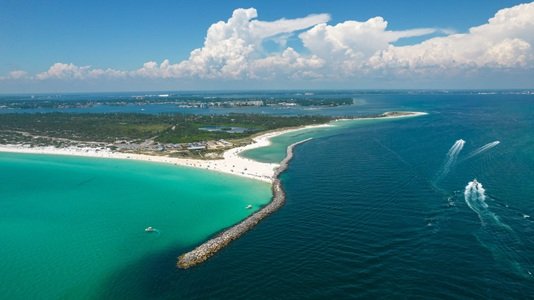
Walk the Gulf-facing beach at St. Andrews and you’ll find open water, real waves, and the occasional dangerous current. Walk around the corner to the jetty, though, and the whole picture changes: calm, protected water teeming with fish, ideal for snorkeling even if you’ve never tried it before. This split personality, open Gulf on one side, sheltered jetty on the other, is what makes St. Andrews State Park one of the most complete beach destinations on the Florida Panhandle, alongside alligator-filled nature trails and a shuttle out to undeveloped Shell Island.
Here’s what to know about fees, snorkeling spots, and current camping details before a 2026 visit.
St. Andrews State Park Overview
| Detail | Information |
| Location | 4607 State Park Lane, Panama City, FL 32408 |
| Park hours | 8 a.m. until sundown, 365 days a year |
| Vehicle entrance fee | $8 per vehicle |
| Pedestrian/bicycle fee | $2 per person |
| Beach length | Over 1.5 miles, Gulf of Mexico and Grand Lagoon |
| Best snorkeling | Tidal Pool Beach and the jetty rocks (protected, calm water) |
| Camping | 176 sites across Pine Grove and Lagoon Campgrounds, plus glamping tents |
| Camping fee | $28/night plus $6.70 reservation fee and $7 utility fee (not tent camping) |
| Camping reservation window | 11 months (FL residents); 10 months (non-residents) |
| Nature trails | Heron Pond Trail and Gator Lake Trail, about half a mile each |
| Shell Island access | Passenger ferry/shuttle from the Gulf Pier Beach parking area |
The Jetty: Where the Best Snorkeling Actually Is
This is the detail that catches first-time visitors off guard, sometimes after they’ve already spent an hour on the open Gulf beach wondering where all the marine life is. St. Andrews’ real snorkeling draw is the jetty area, a protected zone with essentially no wave action and considerably more visible fish than the open Gulf shoreline nearby. Tidal Pool Beach, which connects directly to Jetty Beach, is the easiest and most beginner-friendly spot to get in the water with a mask and snorkel, since the calm, shallow conditions suit first-timers and kids alike.
If you didn’t bring your own gear, on-site stores sell snorkeling equipment, so forgetting yours at home doesn’t have to end the plan. Just know that the jetty area gets crowded quickly once word gets around on a given day, so arriving early gives you both easier parking and a better shot at a quieter stretch of water before the crowds build.
Reading the Beach Flags Before You Swim
Unlike the calm jetty, the park’s open Gulf beaches carry real currents, and dangerous undertows can develop close to shore even when the water looks deceptively calm. St. Andrews posts a beach flag warning system, and purple or red flags specifically signal conditions dangerous enough that entering the water isn’t recommended. Ignoring a red flag here isn’t just against posted guidance, it’s a genuine safety risk, and the park has gone as far as flying aircraft over Jetty Beach in the past specifically to remind visitors of current conditions.
Check the day’s flag status before heading into the water on the Gulf side, and remember that swimming throughout the park is generally at your own risk rather than guaranteed lifeguard-covered, so don’t assume a staffed beach the way you might at a more developed resort strip nearby.
Wildlife: Alligators, Sea Turtles, and What to Watch For
St. Andrews supports a genuinely diverse mix of coastal wildlife, including dolphins, sea turtles, migratory birds, deer, and alligators, largely thanks to its mix of Gulf shoreline, bay habitat, and freshwater features like Gator Lake. The half-mile Gator Lake Trail lives up to its name, offering a real chance to spot alligators and turtles along with birdlife, while the similarly short Heron Pond Trail covers different coastal plant communities worth a slower walk for birders specifically.
As with any park hosting wild alligators, observe from a genuine distance, never feed wildlife, and keep pets and children away from the water’s edge near Gator Lake specifically. The park explicitly asks visitors to avoid disturbing nests or habitat, particularly relevant during sea turtle nesting season along the Gulf beach.
Shell Island: A Day Trip Within the Park
For visitors wanting to extend beyond the mainland section of St. Andrews, a passenger ferry or shuttle departs from the Gulf Pier Beach parking area out to Shell Island, an undeveloped barrier island known for shelling and quieter beaches than the mainland park sees on a busy day. This service typically runs during spring, summer, and part of fall, so if a Shell Island trip is part of your plan, confirm current ferry schedules before your visit, since availability shifts seasonally and can be affected by weather.
Camping: Choosing Between Pine Grove and Lagoon
St. Andrews offers 176 total campsites split between Pine Grove and Lagoon Campgrounds, both situated along Grand Lagoon and benefiting from the salt breeze that distinguishes this park’s camping experience from a typical inland Florida site. Standard sites run $28 a night plus a $6.70 reservation fee and a $7 utility fee covering water and electricity, though the utility fee doesn’t apply if you’re tent camping without hookups. Glamping tents have recently joined the accommodation mix, offering a middle-ground option between standard camping and something closer to a furnished stay.
Booking windows differ by residency: Florida residents can reserve standard campsites up to 11 months ahead, while non-residents get a 10-month window, a detail worth knowing if you’re planning a trip from out of state and want to lock in a site as early as possible. Given the park’s popularity as a Panama City Beach destination, especially during summer, booking near the front of your available window is the safer strategy rather than waiting.
Bikes, Pets, and Other Park Rules
A roughly two-mile paved road throughout the park serves as a popular recreational biking route, though bicycles are restricted to the roadway itself and not permitted on footpaths, boardwalks, or the beach. If you’re bringing a dog, know that St. Andrews is genuinely pet-friendly on a leash throughout most of the park, but dogs aren’t permitted on the beaches themselves, so plan pet-friendly activities around the trails and campground rather than the shoreline.
Frequently Asked Questions
Q1. Where’s the best spot to snorkel if I’ve never done it before?
Tidal Pool Beach, connected to Jetty Beach, offers the calmest, most beginner-friendly conditions in the park, protected from the open Gulf’s waves and currents. It’s a considerably easier introduction to snorkeling than the open beach areas.
Q2. How do I know if it’s safe to swim on a given day?
Check the posted beach flags before entering the water, especially on the Gulf-facing beaches. Purple or red flags signal dangerous conditions, including strong currents and undertows, and should not be ignored regardless of how calm the water appears from shore.
Q3. Can I bring my dog to the beach at St. Andrews?
No. While the park is pet-friendly and leashed dogs are welcome in most areas, including trails and the campground, dogs aren’t permitted on the beaches themselves.
Q4. Do I need to book the Shell Island ferry in advance?
Availability and schedules shift seasonally, typically running spring through part of fall, so checking current ferry times before your visit is worth doing, particularly if a Shell Island day trip is central to your plans and you want to avoid arriving to find the shuttle not running that day.