In August 2020, wildfire tore through 97% of California’s oldest state park, destroying nearly every building, campground, and piece of infrastructure inside it. Six years later, Big Basin Redwoods is still recovering, and visiting it in 2026 means something genuinely different than it did before the fire: a reservation-only day-use system, a forest actively regrowing from blackened trunks, and a rebuilding project that’s still years from finished. It’s also, remarkably, still worth the trip — the ancient redwoods themselves largely survived, and watching this landscape recover has become its own kind of attraction.
Here’s what’s actually open, what isn’t, and how to plan a visit around an ongoing recovery.
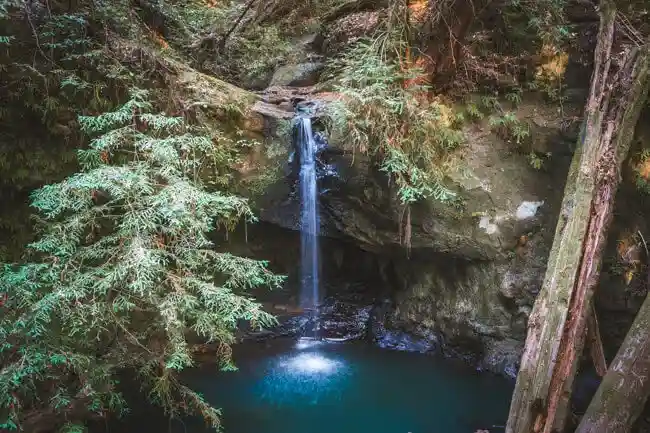
Big Basin Redwoods State Park Overview
| Detail | Information |
| Location | Boulder Creek, CA, in the Santa Cruz Mountains |
| Established | 1902 — California’s oldest state park |
| Fire impact | CZU Lightning Complex Fire (2020) burned roughly 97% of the park’s 18,224 acres |
| Reopening status | Partial day-use reopening since July 2022 |
| Parking access | Guaranteed only with a prior online reservation |
| Open trails | Redwood Loop, ~18 miles of fire roads, Sempervirens Falls trail, Skyline to Sea segments to China Grade Road/Castle Rock, Hihn Hammond connector |
| Closed trails | Berry Creek Falls trail; full Skyline to Sea Trail to the coast |
| Estimated backcountry restoration | 7–10 years for full trail infrastructure recovery |
| Camping | Only at Rancho del Oso walk-in campground (coastal side, less fire-affected) |
| Free bus access | Santa Cruz Metro Route 35, weekends in summer; no fee or reservation required by bus |
Why a Reservation Is Required Just to Park
This is the detail that catches returning visitors off guard the most. Unlike a typical day-use park where you show up and pay at the gate, parking in Big Basin’s main day-use area is only guaranteed through a prior online reservation, a direct result of the limited infrastructure still in place following the fire. Without electricity, running water, and most permanent facilities rebuilt, the park manages visitor numbers carefully to avoid overwhelming what’s currently available.
If you’re planning to drive in, book your reservation on the official Big Basin Redwoods State Park page well ahead of your visit date rather than assuming walk-up parking will be available. Highway 236 itself remains open to regular vehicle and bicycle through-traffic, so reaching the general area isn’t restricted, it’s specifically parking within the day-use area that requires advance booking.
The Free Bus Option Most Visitors Don’t Know About
For anyone flexible on transportation, Santa Cruz Metro now runs weekend summer service to Big Basin via Bus Route 35, and visitors arriving this way skip both the entrance fee and the reservation requirement entirely. This is a genuinely useful workaround if reservations for your preferred date are full, or if you’d simply rather not deal with the parking system at all. It’s also a lower-impact way to visit a park still very much in recovery mode.
What’s Actually Open: Trails Worth Knowing About
The trail network has expanded steadily since the initial 2022 reopening, and it’s worth checking current status before your visit since access keeps growing. The Redwood Loop remains the core walk through much of the old-growth grove, alongside roughly 18 miles of fire roads near the historic park area. More recently, an additional four miles of trail reopened access to Sempervirens Falls, and segments of the Skyline to the Sea Trail now connect the Main Day-Use Area to China Grade Road and onward toward Castle Rock State Park, along with the Hihn Hammond connector trail along Opal Creek.
What remains closed matters just as much. The Berry Creek Falls trail and the full Skyline to the Sea Trail all the way to the coast are still off-limits, with California State Parks estimating 7 to 10 years for complete backcountry restoration, since the fire destroyed bridges and trail structures along with the vegetation that once stabilized the surrounding terrain. If a specific waterfall or backcountry route was the reason for your visit, verify current status before you go, since full restoration is a genuinely long-term project rather than something wrapping up soon.
Camping: What’s Available Right Now
Traditional camping within the redwood groves themselves hasn’t been restored, and it won’t return until the broader “Reimagining Big Basin” rebuilding project reaches that stage, a timeline that continues to extend as planning and environmental review proceed. Currently, the only camping option is the walk-in campground at Rancho del Oso, on the park’s coastal side, an area considerably less affected by the 2020 fire. If an overnight stay at Big Basin is part of your plan, this coastal site is your only option for now rather than the classic redwood-grove camping experience longtime visitors may remember.
Why the Redwoods Themselves Survived
Despite the scale of the fire, most of Big Basin’s ancient trees, some over 1,000 to 2,000 years old, survived thanks to bark that can run up to 12 inches thick and genuinely resists fire damage. Coast redwoods can also resprout from their base even when a trunk is severely damaged, and green growth began appearing on blackened trunks within weeks of the fire. Walking the Redwood Loop today means seeing this recovery firsthand, a landscape actively regenerating rather than simply damaged and static, which has become its own reason many visitors return.
Frequently Asked Questions
Q1. Do I need a reservation if I’m arriving by bus instead of driving?
No. Visitors who arrive via Santa Cruz Metro’s Route 35 bus service skip both the entrance fee and the parking reservation requirement entirely, since the reservation system specifically manages vehicle parking capacity in the day-use area.
Q2. Can I still camp in the redwood groves at Big Basin?
Not currently. Traditional in-park camping among the redwoods hasn’t been restored since the fire. The only available option is the walk-in Rancho del Oso campground on the park’s coastal side, which was largely unaffected by the 2020 fire.
Q3. Is it worth visiting Big Basin now, or should I wait until full restoration is complete?
Many recent visitors find real value in seeing the forest’s active recovery, watching new growth emerge from fire-scarred trunks along the accessible trails. If your priority is specific closed features like Berry Creek Falls, though, know that full backcountry restoration is estimated at 7 to 10 years out, so those specific areas won’t be accessible anytime soon.
Q4. How do I find out about newly reopened trails before my visit?
Check the official Reimagining Big Basin website or the California State Parks page for Big Basin directly, since trail access has expanded incrementally and continues to change as restoration work progresses in different sections of the park.