Legend holds that modern rock climbing as a sport actually began here, among the sculpted sandstone formations scattered through this ridge of the Santa Cruz Mountains. Today, Castle Rock State Park still draws climbers with bouldering pads slung over their shoulders, alongside hikers connecting to the 32-mile Skyline-to-the-Sea backpacking trail toward Big Basin Redwoods. But this is also a park with a genuinely unusual rule: any measurable rain at the ranger office can shut down climbing entirely for up to three days, a detail worth knowing before you drive up from the Bay Area with gear in the trunk.
Here’s what to know about parking, climbing closures, and trail access before a 2026 visit.
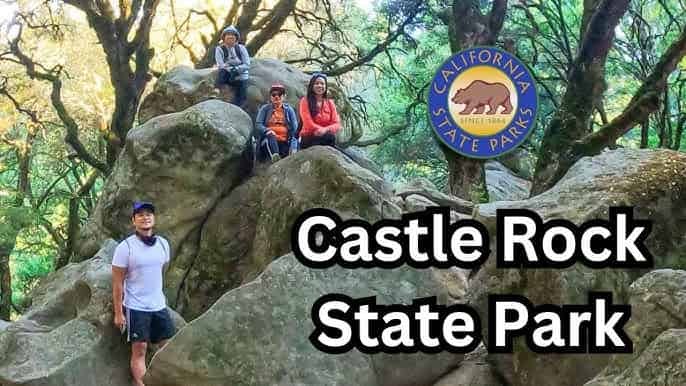
Castle Rock State Park Overview
| Detail | Information |
| Location | Highway 35, about 2 miles southeast of the junction with Highway 9 (Saratoga Gap) |
| Day-use hours | 6 a.m. to sunset |
| Parking fee | $10/day at the main lot, self-serve kiosks; $8 at some smaller trailhead lots |
| Trail mileage | 34–35 miles |
| Signature trail | Skyline-to-the-Sea Trail — 32-mile backpacking route to Big Basin Redwoods and Waddell Beach |
| Trail camps | Two, first-come first-served, 20 sites total |
| Rain-triggered climbing closure | Measurable rain at Kirkwood Office can close climbing for up to 3 days |
| Horses | Allowed on Saratoga Toll Road only |
| Bicycles | Allowed only on the Skyline Trail (Bay Area Ridge Trail), north side of Hwy 35 |
| Prohibited items | Drones, glass containers, smoking, firearms/weapons of any kind |
The Rain Closure Rule Every Climber Should Know
This is a genuinely unusual policy worth understanding before you plan a climbing trip here specifically. Under District Superintendent Closure Order #715-002-20, any measurable amount of rain recorded at the Castle Rock Kirkwood Office can trigger a climbing facilities closure lasting up to three days, even after the rain itself has stopped and the sun is back out. This rule exists to protect the park’s sandstone formations, which are more vulnerable to damage and erosion when climbed while still wet from recent rainfall.
If you’re planning a climbing-focused trip during California’s wetter months, roughly November through April, check current closure status before you drive up, since a storm earlier in the week could still have the climbing areas closed on your planned visit day. Hiking and other non-climbing activities generally aren’t affected by this specific closure order, so a rained-out climbing day doesn’t necessarily mean a wasted trip to the park overall.
Parking: What to Expect and What It Costs
The main entrance, the Robert C. Kirkwood Entrance, offers a 90-car parking lot with permeable, environmentally friendly paving, charging $10 per day through self-serve kiosks. Some smaller trailhead lots elsewhere in the park charge closer to $8, and free roadside parking is occasionally available nearby when the lot itself is full, though supporting the park through the paid fee helps fund ongoing maintenance and restoration work.
Weekends see this lot fill regularly, particularly given the park’s popularity with both hikers and climbers from across the Bay Area. If you’re visiting on a weekend, arriving earlier in the day improves your odds of a spot in the main lot rather than relying on roadside parking, which isn’t guaranteed to be available.
The Skyline-to-the-Sea Trail: A Genuine Backpacking Route
Castle Rock serves as the starting point for the Skyline-to-the-Sea Trail, a 32-mile backpacking route that continues through Big Basin Redwoods State Park and ends at Waddell Beach on the coast. This isn’t a casual day hike, it’s a multi-day backpacking commitment requiring advance reservations for the trail camps along the way. If you’re planning this full route, book your camp reservations well ahead, and note that Big Basin itself, one of the route’s key waypoints, has been undergoing an extended recovery process following the 2020 CZU Lightning Complex Fire, so check current conditions along the full route rather than assuming standard access throughout.
For visitors not attempting the full backpacking trip, Castle Rock’s own 34 to 35 miles of trails offer plenty of day-hike options, including several shorter, family-friendly walks accessible even to visitors with limited mobility, alongside more rugged routes through the park’s sandstone caverns and rock formations.
Trail Camps: What to Know Before You Book
Castle Rock offers two trail camps, both operating on a first-come, first-served basis with a combined 20 sites, each equipped with a table and access to piped water. If you have reservations for the hike-in campground, you’ll need to stop at the main ranger station first to register and receive a parking pass before heading to the trailhead, which sits a bit further down Highway 35 from the main lot. The campground itself is roughly a 2.5-mile hike in from the trailhead parking area, so plan for that additional distance when timing your arrival.
One quirk worth knowing: rangers at the main parking area can advise on current site availability before you commit to the hike in, worth checking given the first-come, first-served nature of the camps, particularly during busy weekends when sites can fill.
Rules That Might Surprise You
A handful of park rules are worth knowing upfront. Dogs aren’t allowed on the popular Castle Rock Nature Trail, a restriction that surprises visitors used to more dog-friendly California parks, so plan accordingly if you’re hiking with a pet. Bicycles are restricted specifically to the Skyline Trail (part of the Bay Area Ridge Trail) on the north side of Highway 35, meaning most of the park’s interior trails aren’t open to cycling. Horses are similarly restricted to the Saratoga Toll Road, which extends from Saratoga Gap toward Big Basin Redwoods.
Drones and any unmanned aircraft systems are prohibited throughout the park to protect wildlife and cultural resources, and glass containers, smoking, and any device capable of harming people or animals, including BB guns, bows, and slingshots, are banned park-wide.
Frequently Asked Questions
Q1. How do I know if climbing is currently allowed, or if a recent storm has triggered a closure?
Check current conditions with the park or Castle Rock Kirkwood Office directly before heading out, especially after any recent rain in the Santa Cruz Mountains area. Since measurable rain can trigger up to a three-day climbing closure, a storm from a few days prior could still be affecting access on your planned visit date.
Q2. Can I bring my dog on the trails at Castle Rock?
Dogs aren’t permitted on the popular Castle Rock Nature Trail specifically. Check current pet policies for other trails in the park before bringing a dog along, since restrictions can vary by specific route.
Q3. Do I need a reservation to hike the full Skyline-to-the-Sea Trail?
Yes. This 32-mile route to Big Basin Redwoods and Waddell Beach requires advance reservations for the trail camps along the way, since it’s a multi-day backpacking commitment rather than a casual day hike.
Q4. What happens if the main parking lot is full when I arrive on a weekend?
Free roadside parking is occasionally available near the park when the main lot fills, though it’s not guaranteed. Arriving earlier in the day, particularly on weekends, gives you a better chance at securing a spot in the main 90-car lot rather than relying on roadside alternatives.