At nearly 65,000 acres, Allegany is New York’s largest state park, big enough that it’s organized into two entirely separate developed areas, Red House and Quaker, each with its own lake, beach, campground, and cluster of rental cabins. Tucked into the state’s southwestern corner along the Pennsylvania border, adjacent to the Allegheny National Forest, this is genuinely a multi-day destination rather than a quick stop. One trail closure is worth flagging for your 2026 planning: Horse Trail 6 shuts down starting July 1 and remains closed until further notice.
Here’s what to know about choosing between Red House and Quaker, camping reservations, and current trail status before your visit.
Allegany State Park Overview
| Detail | Information |
| Location | Cattaraugus County, NY, near Salamanca and the PA border |
| Park size | About 64,800–65,000+ acres — New York’s largest state park |
| Established | 1921 |
| Two developed areas | Red House (I-86 Exits 19/20) and Quaker (I-86 Exit 18) |
| Vehicle use fee | $7, collected 9 a.m.–4:30 p.m. seasonally |
| Empire Pass | $80/year, covers unlimited day-use at Allegany and all NY State Parks |
| Camping | Reservation required — no walk-up camping accepted anywhere |
| 2026 camping season | May 15–October 31 (most sites); select cabins/cottages open year-round |
| Reservation window | Opens 9 months in advance via Reserve America |
| Current trail closure | Horse Trail 6 closed starting July 1, 2026, until further notice |
Red House vs. Quaker: Choosing Your Base
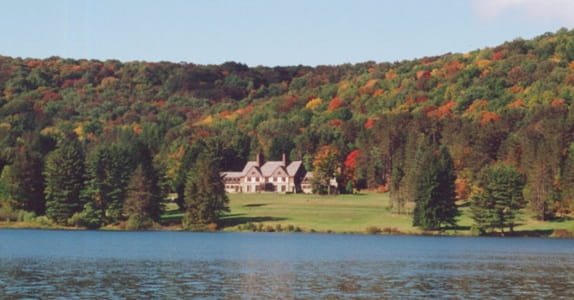
This is genuinely the first decision to make when planning an Allegany visit, since the park’s sheer size means picking the right area matters more than at most state parks. The Red House Area centers on the historic Tudor-style Administration Building and Red House Lake, offering 5 miles of paved bike paths, boat and bike rentals, a sandy beach, and easy access to the park’s nature museum, all fairly centrally located and convenient for first-time visitors. The Quaker Area, by contrast, is built around two lakes, Quaker Lake specifically offering its own sandy beach, two fishing piers, and canoe or kayak access points, along with the Cain Hollow Campground and access to the Art Roscoe Cross Country Ski area.
Both areas offer their own cabins, campgrounds, and trail access, so your choice largely comes down to which specific amenities and activities matter most to your trip, or simply which entrance is more convenient given your direction of travel.
The Vehicle Use Fee: When It Actually Applies
Allegany charges a $7 vehicle use fee, collected at entrance stations between 9 a.m. and 4:30 p.m., but not year-round. For 2026, the fee is collected on weekends and holidays only from late May through late June, then daily through the heart of summer (late June through early September), before returning to weekends-and-holidays-only through mid-October. Outside these collection windows and hours, or if you’re arriving after 4:30 p.m., you generally won’t encounter the fee at the gate.
If Allegany is one stop among several New York State Parks you’re planning to visit throughout the year, the $80 Empire Pass covers unlimited day-use entry across the entire system, including forests, beaches, and trails managed by State Parks and the DEC, a genuinely strong value if you’re visiting more than a handful of times.
Camping: No Walk-Ups, Book Through Reserve America
This is a firm rule worth understanding before you plan a spontaneous camping trip: Allegany does not accept walk-up camping under any circumstances. Every stay, whether a standard campsite, cabin, or cottage, requires an advance reservation through Reserve America, with booking windows opening a full nine months ahead of your intended arrival date. Given the park’s popularity and its scale, over 300 campsites and more than 300 rental cabins across the property, booking as early as that nine-month window allows genuinely improves your odds for peak summer weekends.
Campsite fees run roughly $20 to $33 per night depending on location and site type, while cabins are billed weekly, ranging from about $154 to $596 depending on size and season, with an additional $5 nightly fee for non-New York residents. Cottages run considerably higher, from $690 to $915 weekly. Check-in across all overnight accommodations is 3 p.m., with checkout at 11 a.m. If you’re arriving after normal business hours, check in at the Allegany State Park Support Desk in the Red House Administration Building; arrivals after 2 a.m. should check in with Park Police instead.
Horse Trail 6: Currently Closing for 2026
If horseback riding is part of your Allegany plans, know that Horse Trail 6 is closed starting Wednesday, July 1, 2026, until further notice. This is an open-ended closure rather than a short-term maintenance window, so check current park alerts before finalizing any equestrian-focused itinerary that depends specifically on this trail, since no confirmed reopening date has been announced as of this writing.
Firewood Restrictions: A Real Ecological Rule
To help slow the spread of emerald ash borer beetle infestations, campers cannot bring firewood into the park from outside, a restriction taken seriously given how much of Allegany’s forest consists of hemlock and hardwood trees vulnerable to this invasive pest. Kiln-dried firewood is available for purchase on-site for campfires, so plan to buy locally rather than hauling your own wood from home, regardless of how far you’re traveling to reach the park.
Cell Service and Fuel: Plan Ahead for the Interior
Cell coverage throughout much of Allegany’s interior is genuinely unreliable, particularly on ridge trails and in the Quaker Run backcountry. Downloading trail maps before you arrive, rather than counting on real-time navigation once you’re deep in the park, is a smart precaution given how large and remote portions of this property genuinely are. The park also has no gas stations of its own, so fuel up in Salamanca before heading in, since running low on gas within the park’s interior could mean a considerably longer drive to find a station than you’d expect.
Swimming Season and Beach Access
For 2026, the official swimming season at Allegany’s beaches runs June 20 through September 7, daily from 11 a.m. to 6:30 p.m. Both the Red House and Quaker beaches offer sandy swimming areas, and outside this specific window and daily schedule, swimming access isn’t officially staffed or guaranteed, so plan your beach day within these dates if lifeguard-supervised swimming matters to your visit.
Frequently Asked Questions
Q1. Can I show up and camp without a reservation if sites look available?
No. Allegany State Park does not accept walk-up camping under any circumstances, regardless of apparent availability. Every campsite, cabin, and cottage requires an advance reservation through Reserve America, with the booking window opening nine months before your arrival date.
Q2. Which area should I choose, Red House or Quaker, for a first visit?
Red House offers more centralized amenities around the historic Administration Building and Red House Lake, including paved bike paths and the nature museum, making it a convenient choice for first-time visitors. Quaker centers on two lakes with strong fishing and paddling access, appealing more to visitors prioritizing those specific activities.
Q3. Is Horse Trail 6 available for use during my 2026 visit?
Not after July 1, 2026. This trail closes starting that date and remains closed until further notice, with no confirmed reopening announced. Check the park’s current alerts before planning an equestrian trip specifically around this trail.
Q4. Can I bring my own firewood for camping?
No. To help prevent the spread of emerald ash borer, campers cannot bring firewood from outside the park. Kiln-dried firewood is available for purchase on-site, so plan to buy locally rather than transporting your own wood.