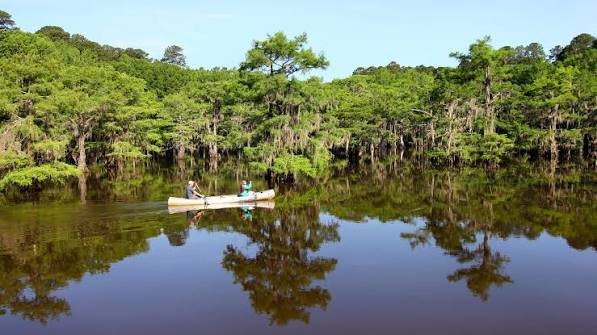
Spanish moss doesn’t hang from just any tree, and Caddo Lake doesn’t look like anywhere else in Texas. This 484-acre park sits along the edge of the largest naturally formed lake in the state, where bald cypress trees rise straight out of dark, still water and form what’s recognized as the largest cypress forest on Earth. It’s the kind of place that photographs like a movie set and feels, once you’re paddling through it, genuinely otherworldly.
If you’re planning a trip in 2026, here’s everything worth knowing before you load up the car, from entrance fees to the one wildlife encounter you should actually take seriously.
Caddo Lake State Park at a Glance
| Detail | Information |
| Location | 245 Park Road 2, Karnack, TX 75661 (Harrison County) |
| Park Size | 484 acres |
| Hours | Daily, 8:15 a.m. – 4:45 p.m. |
| Entrance Fee | $4 per person, ages 13+; 12 and under free |
| Busy Season | March through November |
| Camping | Tent sites, water/electric sites, screened shelters, cabins |
| Canoe Rental | Roughly $10 for 1 hour, $20 for 3 hours (subject to change) |
| Phone | (903) 679-3351 |
| Reservations | Recommended for camping and day use during peak months |
| Notable Wildlife | American alligators, waterfowl, otters |
Getting There and What to Expect on Arrival
The drive into Caddo Lake feels like part of the experience rather than just a means to it. Coming from Dallas, you’ll take I-20 East to Marshall, then Highway 43 North before turning onto FM 2198 and finally Park Road 2 to reach headquarters. Coming from Atlanta, Texas, it’s a similar approach via Highway 43 South. Both routes rely on paved highways and farm-to-market roads, so you won’t need anything more rugged than a standard car or small RV to get there comfortably.
One detail that trips up first-time visitors: the park doesn’t have a gate. If you’re arriving after the 4:45 p.m. office closing, you’re required to call ahead so staff can add your name to a late arrival list posted at the entrance with your site number. Miss that call, and you could find yourself standing in the parking lot at dusk with no clear way to confirm your reservation.
Entrance Fees and Camping Costs
Getting into the park itself is refreshingly affordable. The daily entrance fee runs $4 per person for anyone 13 or older, while kids 12 and under get in free. That fee applies on top of whatever camping or cabin costs you’re paying, not instead of them, so budget for both when planning your trip.
Camping options range from basic tent sites to sites with water and electric hookups, along with screened shelters and cabins for visitors who’d rather skip the tent altogether. Prices for individual sites start around $4 per night on the low end, though water, electric, and cabin options run considerably higher depending on the season and amenities. If you’re planning multiple trips to Texas state parks throughout the year, the annual Texas State Park Pass covers entrance fees at more than 80 parks statewide, which can pay for itself quickly if you’re a frequent visitor.
Why Reservations Matter More Than You’d Think
Caddo Lake regularly reaches capacity during its busy season, which stretches from March through November, essentially covering spring, summer, and fall in East Texas. Spontaneous weekend trips without a reservation are a real gamble during these months, particularly for camping and cabin rentals, which tend to book out well in advance.
Campsite reservations follow a tiered booking window depending on the site type. Some sites open up to five months ahead, while others allow booking as far out as twelve months. If your travel plans shift after booking, modifying or canceling promptly is genuinely appreciated by park staff, since it frees the site for someone else rather than leaving it empty on the books.
Paddling Through the Cypress Forest
The single activity most people come to Caddo Lake specifically for is paddling through the flooded cypress groves, and it genuinely lives up to the reputation. Canoe rentals through the park run roughly $10 for an hour or $20 for three hours, with each canoe rated for a weight limit around 700 pounds. If you’d rather bring your own canoe, kayak, or small boat, that’s welcomed too, and the park has multiple docking areas, though it’s worth checking in at the park office first to confirm the best access points for the day.
One quirk worth knowing ahead of time: rentals can sell out fast, especially if the park is hosting an event that day. Nearby Johnson Ranch Marina offers an alternative rental option if the park’s own canoes are unavailable, so it’s worth keeping that as a backup rather than driving away disappointed.
Hiking, Fishing, and Other Ways to Spend the Day
While paddling gets most of the attention, the park’s hiking trails are genuinely well maintained, even if there aren’t many of them. They wind through dense piney woods and along the water’s edge, offering a quieter way to experience the same cypress-draped landscape without getting in a boat. Fishing is another popular draw here, with Caddo Lake known among Texas anglers for bass, crappie, and catfish.
The on-site camp store stays reasonably well stocked with snacks, basic supplies, and souvenirs, and staff have a reputation for being genuinely helpful with local tips, whether that’s the best current fishing spots or which trail loop to take if you’re short on time.
A Practical Note About Firewood
Harrison County, where the park sits, remains under a quarantine intended to prevent the spread of the emerald ash borer, a destructive invasive insect. That means bringing firewood in from outside the area isn’t allowed. The practical takeaway: buy your firewood locally, ideally right at or near the park, rather than hauling it in from home.
The Wildlife Reality Worth Taking Seriously
Caddo Lake is alligator habitat, and that’s not a rare or occasional sighting, it’s simply part of the ecosystem here. Alligators are native to the lake and its surrounding waterways, and while encounters are generally uneventful if you use common sense, the park does provide specific safety guidance that’s genuinely worth reviewing before you paddle out or let kids wade near the shoreline. Respecting the distance and never feeding wildlife applies here just as strictly as it would at any park with large predators.
FAQs
Q1. Do I need a reservation to just visit for the day, or only for camping?
Day-use visitors don’t strictly need a reservation to enter, but during the busy season from March through November, the park frequently reaches capacity. Reserving a day-use pass in advance is the safer bet if you’re planning a specific date and don’t want to risk being turned away.
Q2. Can I bring my own kayak instead of renting one from the park?
Yes, bringing your own canoe, kayak, or small boat is allowed, and the park has multiple docking areas available. It’s a good idea to check in at the park office first so staff can point you toward the most convenient access point for that day.
Q3. What should I do if I’m arriving at the park after the office closes?
Call the park by 4:45 p.m. on your arrival day to have your name added to the late arrival list posted at the entrance, along with your assigned site number. Since the park doesn’t have a physical gate, this call is essential to confirm your reservation is accounted for.
Q4. Is it safe to swim in Caddo Lake given the alligator population?
The park doesn’t prohibit swimming outright, but given that alligators are a genuine, active part of the ecosystem, it’s worth reviewing the park’s specific wildlife safety guidance before deciding where and when to get in the water, and always supervising children closely near the shoreline.