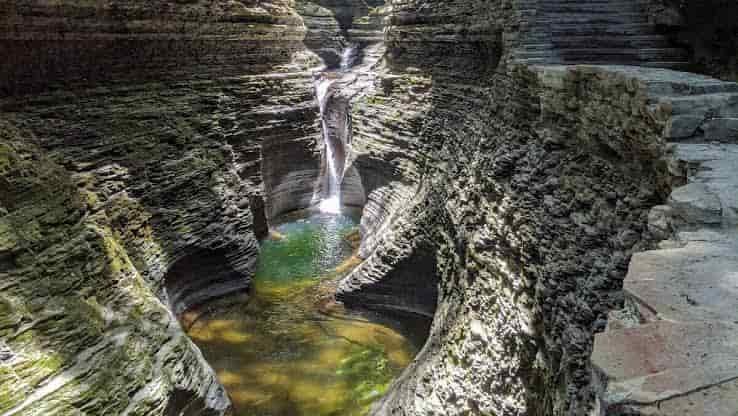
One trail. More than twenty named waterfalls. A 94-foot cascade at the far end that makes the whole 7.2-mile loop worth the stone steps and steep descents to reach it. Ricketts Glen State Park’s Falls Trail System is widely considered Pennsylvania’s premier waterfall hike, cutting through a National Natural Landmark of old-growth forest in the state’s northeast corner. It’s also rated “most difficult” by Pennsylvania’s own state park system, and it closes entirely most winters due to ice, two details worth knowing before you lace up your boots.
Here’s what to expect for a 2026 visit, from parking strategy to the winter closure window.

Ricketts Glen State Park Overview
| Detail | Information |
| Location | Luzerne, Sullivan, and Columbia counties, PA |
| Park size | About 13,050–13,193 acres |
| Park admission | Free; day-use areas close at sunset |
| Notable designation | Glens Natural Area — a National Natural Landmark |
| Falls Trail full loop | 7.2 miles, 4–6 hours typical completion time |
| Named waterfalls | Over 20, including 94-foot Ganoga Falls, the tallest |
| Trail difficulty rating | “Most Difficult” (PA State Parks rating) |
| Winter Falls Trail closure | Typically late November through mid-to-late April |
| Lake Jean | 245 acres; swimming, boating, fishing |
| Camping season | Mid-April through mid-December (cabins available year-round) |
| Total trail mileage (park-wide) | Over 26 miles |
Why the Falls Trail Closes Every Winter
This is the single most important seasonal detail for planning a Ricketts Glen visit. Every winter, typically from late November through mid-to-late April, the Falls Trail closes to standard hikers due to ice and genuinely hazardous conditions on the steep, rocky terrain. During this window, only registered ice climbers and experienced hikers equipped with crampons, an ice ax, rope, and a hiking partner are permitted on the trail, and even they’re required to sign in at the park office or a designated registration point before heading out.
If your visit falls within this window, don’t plan around hiking the Falls Trail unless you’re genuinely equipped and experienced for winter ice travel. Exact reopening dates shift slightly year to year based on conditions, so calling the park office at 570-477-5675 before a spring visit is worth doing to confirm the trail has actually reopened for the season.
Picking the Right Trailhead: Three Very Different Access Points
Ricketts Glen offers three separate parking areas leading into the Falls Trail, and choosing the right one significantly changes your hiking experience. Lake Rose Trailhead sits closest to the falls, offering just a 5 to 10-minute walk to reach the trail system, but it fills up quickly during peak times, particularly weekends in spring and fall. Beach Parking Lot #2 requires a slightly longer approach, 15 to 20 minutes, walking past a park gate before reaching the trail. The parking areas along PA 118 sit farthest out, about 1.5 miles from the first waterfall, but reward that extra distance with excellent views of the park’s old-growth trees along the way.
If your priority is reaching the waterfalls as efficiently as possible, arrive early for Lake Rose Trailhead parking. If you don’t mind a longer walk and want to experience more of the ancient forest before reaching the falls, the PA 118 lots are a solid alternative, especially once Lake Rose fills for the day.
What Makes the Falls Trail Genuinely Difficult
Pennsylvania’s own state park system rates this trail “Most Difficult,” and it’s not an exaggeration. The full 7.2-mile loop features rocky terrain, steep descents, and challenging stone steps throughout, generally taking 4 to 6 hours to complete at a leisurely pace with photo stops factored in. Ganoga Falls, the tallest at 94 feet, sits roughly 3.2 miles from the Lake Rose Trailhead, giving you a sense of how much ground you’ll cover before reaching the signature waterfall.
Proper hiking boots are essential here, not optional, given the combination of wet rock, uneven stone steps, and significant elevation change throughout the loop. If you’re hiking with a small dog, be prepared to carry it through the steeper, narrower sections, since the terrain genuinely isn’t manageable for smaller animals in several stretches.
Swimming Rules: Where You Actually Can (and Can’t) Get in the Water
Given how many waterfalls and pools line the Falls Trail, it’s a common assumption that swimming is fair game somewhere along the route. It isn’t. Swimming is prohibited in any of the waterfalls or pools along the Falls Trail, both because the water stays extremely cold year-round with dangerous currents and slippery rocks, and because Pennsylvania state regulations specifically bar it in this area. If a swim is part of your plan, Lake Jean, the park’s 245-acre lake, is the designated spot for swimming, boating, and fishing instead.
Camping: Current Season and a Future Heads-Up
The park’s campground operates from mid-April through mid-December, with more than 120 sites offering hookups and shower facilities, plus year-round cabins available separately by reservation. Worth flagging for anyone planning stays further out: beginning in 2027, the campground will undergo a major shower house renovation project, with portions temporarily closed in phases while other sections remain open and bookable. If you’re booking well ahead into 2027, check whether your specific site shows availability in the reservation system, since impacted sites are blocked from booking during their renovation phase, while unaffected sites remain open as normal.
Timing Your Visit: Best Seasons for Water Flow and Crowds
Spring and fall generally offer the strongest waterfall flow combined with comfortable hiking temperatures, making these the recommended seasons if peak scenery is your priority. Summer brings full foliage and genuinely heavy crowds, particularly around holiday weekends like Memorial Day, so if you’re visiting in summer, starting the Falls Trail early in the morning helps you beat both the congestion and the day’s heat while also catching better light for photography.
Frequently Asked Questions
Q1. Can I hike the Falls Trail in winter if I’m an experienced hiker without ice climbing gear?
No. During the winter closure period, typically late November through mid-to-late April, only registered ice climbers and hikers equipped with crampons, an ice ax, rope, and a partner are permitted on the trail. Standard winter hiking gear without this specific equipment doesn’t meet the requirement.
Q2. Is there anywhere to swim near the Falls Trail itself?
No. Swimming is prohibited in all the waterfalls and pools along the Falls Trail due to cold water, dangerous currents, and state regulations. Lake Jean is the park’s designated area for swimming, boating, and fishing instead.
Q3. Which trailhead should I use if Lake Rose parking is full when I arrive?
The Beach Parking Lot #2 offers a slightly longer walk (15–20 minutes) but is a solid backup, while the PA 118 lots, though 1.5 miles from the first waterfall, provide excellent old-growth forest views on the approach and tend to have more consistent availability.
Q4. How difficult is the full Falls Trail loop for an average hiker?
It’s rated “Most Difficult” by Pennsylvania State Parks, featuring steep descents, stone steps, and significant elevation change over 7.2 miles, typically taking 4 to 6 hours. Proper hiking boots and reasonable fitness are genuinely necessary rather than optional for completing the full loop comfortably.