California’s largest state park sprawls across nearly 640,000 acres of desert wilderness, roughly two hours from San Diego, Riverside, and Palm Springs alike. Anza-Borrego offers something genuinely rare among state parks: legal roadside camping across most of its vast territory, meaning you can pull off and pitch a tent almost anywhere without booking a reserved site months in advance. It’s also home to one of Southern California’s most spectacular spring wildflower blooms, drawing crowds that somehow still get swallowed up by the park’s sheer size.
If you’re planning a 2026 visit, here’s what actually matters, from when day-use fees actually apply to the specific fire rules that trip up first-time desert campers.
Anza-Borrego Desert State Park at a Glance
| Detail | Information |
| Location | Borrego Springs, CA (San Diego County, extending into Imperial and Riverside) |
| Park Size | Nearly 640,000–600,000+ acres |
| Distance from San Diego | ~2 hours (73 miles) |
| General Entrance Fee | None park-wide |
| Day-Use Fee | $10/vehicle, collected only at Borrego Palm Canyon, Tamarisk Grove, and Vern Whitaker Horse Camp (Fri–Sun and holidays) |
| Best Visiting Season | October through April |
| Wildflower Bloom | Typically February–April, peak often mid-March (varies with rainfall) |
| Primitive/Roadside Camping | Free |
| Developed Campground Fees | $15–$35/night; $80 for group site at Borrego Palm Canyon |
| Wilderness Areas | 12 |
| Unpaved Roads | 500+ miles |
| Group Reservations | Required 6 months in advance; 7-day limit |
Day-Use Fees: Where and When They Actually Apply
Here’s a detail that catches many visitors off guard: there’s no general entrance fee for Anza-Borrego as a whole. Day-use fees are collected only at three specific locations, Borrego Palm Canyon, Tamarisk Grove, and the Vern Whitaker Horse Camp, and only on Fridays through Sundays and holidays. The fee runs $10 per vehicle, and notably, that ticket is valid at any state park within the Colorado Desert District, or across the broader State Park System, for the date of purchase. If you’re just driving through or hiking in areas outside these three specific locations, you generally won’t encounter a fee gate at all.
Roadside Camping: A Genuine Rarity
One of Anza-Borrego’s most distinctive features is that roadside camping is broadly permitted throughout much of the park, a genuinely unusual policy compared to most California state parks. The rules are straightforward: don’t camp further than one car length from any dirt or paved road, since this restriction exists specifically to protect the fragile desert ecosystem from vehicles and camps spreading unchecked across sensitive terrain.
Since there’s no garbage collection outside of developed campgrounds, pack-in, pack-out discipline is essential. Ground fires are not permitted anywhere; you’re required to use a metal container to keep any fire off the ground entirely, and all coals must be packed out and disposed of as trash rather than buried or spread across the soil. This metal-container fire rule trips up more visitors than any other regulation in the park, so plan accordingly if a campfire is part of your desert camping plans.
Choosing a Developed Campground
If you’d rather have amenities than pure roadside freedom, Anza-Borrego offers several developed campgrounds at varying elevations, which genuinely matters given the desert’s temperature extremes. Blair Valley Campground sits at 2,500 feet, offering more moderate temperatures than the desert floor below. Culp Valley, the highest primitive campground, sits at 3,350 feet, while Fish Creek sits at the opposite extreme, just 280 feet above sea level. Choosing a higher-elevation site can make a genuine difference in comfort, particularly during shoulder-season visits when daytime heat is still a real factor.
Developed campground fees range from about $15 to $35 per night, with an $80 rate for the group site at Borrego Palm Canyon Campground. Group reservations require booking a full 6 months in advance and carry a 7-day stay limit. For those wanting a genuinely unique overnight experience, Vern Whitaker Horse Camp caters specifically to visitors traveling with horses.
Timing Your Visit Around the Weather
Summer temperatures in Anza-Borrego are genuinely extreme, regularly exceeding 110 to 125 degrees Fahrenheit depending on the specific location within the park. Visiting between October and April is strongly recommended for anyone planning to hike or spend significant time outdoors, since summer conditions here aren’t just uncomfortable, they’re genuinely dangerous without serious preparation. Winter nights, by contrast, can fall below freezing, so packing layers regardless of season is a smart baseline expectation for desert camping here.
Chasing the Wildflower Bloom
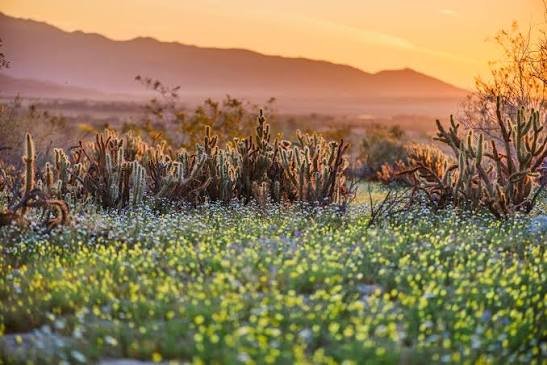
Anza-Borrego’s spring wildflower displays are the park’s single biggest draw, typically occurring sometime between February and April, with peak bloom often landing around mid-March in a typical year. However, the exact timing depends entirely on rainfall patterns from the preceding months, meaning the bloom can shift meaningfully from one year to the next. Despite drawing thousands of visitors during peak bloom weeks, the park’s sheer size means it rarely feels genuinely crowded, a real contrast to how packed smaller wildflower destinations can get during similar seasonal peaks.
Signature Sights Worth Building Your Trip Around
A handful of specific locations consistently rank among visitors’ top highlights. Font’s Point offers sweeping panoramic views over the park’s badlands, a genuinely dramatic vista best seen at sunrise or sunset when the light hits the eroded terrain most dramatically. The Slot Canyon delivers a narrow, winding sandstone passage that feels genuinely otherworldly to walk through. Palm Canyon Trail leads to an oasis populated by native California fan palms, a striking contrast against the surrounding desert terrain, and the Wind Caves feature dramatic wind-carved rock formations paired with scenic desert views.
Wildlife Worth Watching For
Desert bighorn sheep, the park’s namesake animal (borrego is Spanish for sheep), inhabit the rugged terrain and occasionally appear to hikers, though sightings aren’t guaranteed given how well they blend into the rocky landscape. Kit foxes, roadrunners, coyotes, various lizards, and rattlesnakes round out the park’s more commonly encountered wildlife. Coyotes are frequently heard at night but rarely seen, and nocturnal creatures like kangaroo mice and ground owls occasionally appear after dark. Always maintain distance from any wildlife you do encounter, particularly bighorn sheep, which are sensitive to human disturbance.
Off-Roading on 500 Miles of Unpaved Roads
Anza-Borrego offers more than 500 miles of dirt roads suitable for high-clearance and 4×4 vehicles, giving off-road enthusiasts genuine terrain to explore beyond the standard paved routes. Staying strictly on designated routes rather than creating new paths is essential here, given how fragile the desert ecosystem is and how long recovery from off-route damage can take in this climate.
FAQs
Q1. Do I need to pay a fee just to drive through or hike in most of the park?
No, in most cases. Day-use fees are collected only at three specific locations, Borrego Palm Canyon, Tamarisk Grove, and Vern Whitaker Horse Camp, and only Friday through Sunday and holidays. Much of the park’s vast territory doesn’t require any fee at all for general access.
Q2. Can I just pull off the road and camp anywhere in the park?
Largely yes, which is unusual for a state park. Roadside camping is permitted as long as you stay within one car length of a dirt or paved road, helping protect the surrounding desert ecosystem from unchecked vehicle and camp spread.
Q3. How can I find out the exact timing of the wildflower bloom before I plan my trip?
Since bloom timing depends heavily on recent rainfall and shifts from year to year, checking current wildflower reports and park updates closer to your planned travel dates, rather than relying on a fixed calendar date, will give you the most accurate picture of what to expect.
Q4. What’s the biggest mistake first-time desert campers make regarding campfires here?
Forgetting that ground fires aren’t permitted anywhere in the park. You’re required to use a metal container to keep any fire elevated off the soil, and all coals must be packed out as trash afterward rather than buried, so bring a proper fire container if a campfire is part of your plans.