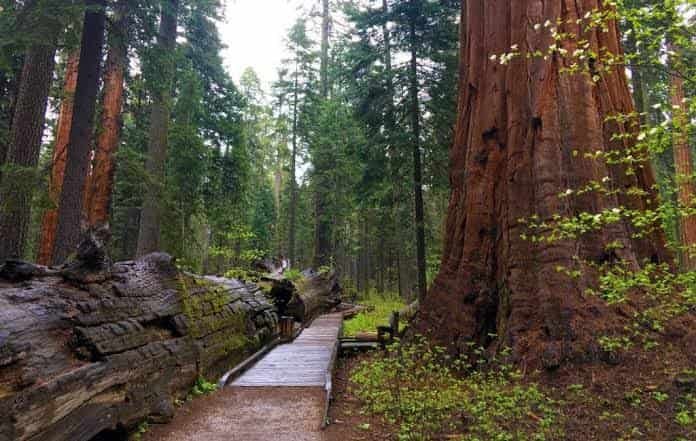
Picture a grove of trees so massive that Gold Rush miners built a dance floor on top of a single stump. That’s not folklore, it actually happened at Calaveras Big Trees State Park, and the giant sequoias standing here today are the same living giants that drew curious explorers up into the Sierra Nevada foothills more than 170 years ago. This park has been protecting two groves of these ancient trees since 1931, and it remains one of the more underrated destinations in California’s state park system.
If a 2026 trip is on your calendar, here’s what you actually need to know before you go, from current fees to which campground fits your travel style.
Calaveras Big Trees State Park at a Glance
| Detail | Information |
| Location | Highway 4, 22 miles east of Angels Camp, Calaveras County, CA |
| Elevation | Approximately 4,700 feet |
| Established | 1931 |
| Day-Use Hours | Sunrise to sunset, open on holidays |
| Entrance Fee | $4 per vehicle (day use) |
| Camping Fee | Around $35 per night for standard sites (up to 8 people, 1 vehicle) |
| Extra Vehicle Fee | $8–$10 per night |
| Campgrounds | North Grove and Oak Hollow (120 sites total) |
| Group Sites | Upper (up to 60 people, $200/night) and Lower (up to 40 people, $135/night) |
| Cabins | Currently closed for construction |
| Reservations | ReserveCalifornia, up to 6 months in advance |
Getting to the Park
Calaveras Big Trees sits about 22 miles east of Angels Camp along Highway 4, roughly a 35-minute drive once you’ve reached that small Gold Rush town. If you’re coming from Southern California, you’ll head north on I-5 or US-99, then cut across toward Stockton before picking up Highway 4 heading through Farmington and beyond. From Sacramento, the route runs south on US-99 to Stockton before turning onto Highway 4, with the full drive taking around an hour and a half from Stockton itself.
One quirk of the approach worth knowing: Highway 4 jogs right, then left again as it passes through Angels Camp along State Highway 49. It’s a minor navigation hiccup, but one that catches first-time visitors off guard if they’re not watching for it.
Choosing Between the Two Campgrounds
The park’s two main campgrounds each serve a genuinely different kind of camper, and picking the right one matters more here than at most parks.
North Grove Campground sits closest to the park entrance and visitor center, making it the more convenient option if you want easy access to the dump station and don’t mind being near the day-use crowds and Highway 4 traffic. It’s the practical choice for RV campers who want proximity over solitude.
Oak Hollow Campground, located about four miles further into the park, trades convenience for quiet. Built into a hillside among pines, cedars, firs, and dogwoods, it feels noticeably more removed from the bustle at the park’s hub. More than half its sites are tent-only, and there’s no cell service here at all, which for many visitors is precisely the point. Wi-fi is available back at the visitor center if you need to check in with the outside world.
Every standard campsite, regardless of which campground you choose, comes equipped with a fire ring, picnic table, a bear locker, and piped water within a few yards of your site. Standard sites accommodate up to 8 people and one vehicle for the base fee, with additional vehicles running an extra $8 to $10 per night and parking in designated overflow areas.
Booking a Site Before It Fills Up
Reservations open through ReserveCalifornia at 8 a.m., six months ahead of your travel date, and summer weekends fill quickly once that window opens. If you’re set on a specific site, especially one that’s level and RV-friendly, booking right when the window opens gives you the best shot.
Speaking of leveling: several campers who’ve stayed at North Grove have noted that not every site marked for trailers is actually level ground. If you’re bringing anything larger than a tent, sticking to the first loop tends to offer the most consistently paved and even sites. It’s a small detail, but one that can make or break a night’s sleep in an RV.
If you strike out on official reservations, the surrounding Stanislaus National Forest offers additional public campgrounds nearby, along with private options through services like Hipcamp, so a full reservation calendar at the park itself doesn’t have to end your trip planning.
What You Won’t Find Right Now
A few amenities are currently unavailable, and it’s worth knowing before you arrive rather than discovering it at check-in. Cabin rentals throughout the park are closed for construction until further notice, so anyone hoping to skip the tent-and-sleeping-bag setup will need to look elsewhere for now. The campground dump station has also been closed at points recently, so RV campers should confirm current status before counting on it.
Group camping options remain available and popular for larger gatherings. The Upper group site accommodates between 9 and 60 people at $200 per night, while the Lower site holds 9 to 40 people for $135 per night, with both including flush toilets, showers, bear lockers, and fire rings. Rates run higher over holiday weekends, so plan accordingly if you’re organizing a reunion or larger group trip.
Hiking Among the Giants
The park’s signature experience is simply walking beneath the sequoias, and it delivers on that promise without requiring serious hiking fitness. The South Grove trail near the visitor center runs about two miles and is manageable even for families with young kids. For visitors wanting more distance and fewer fellow travelers, the North Grove trail and the Bradley Grove trail both stretch further into quieter parts of the park, and pairing either hike with a dip in Beaver Creek afterward has become something of an unofficial ritual among repeat visitors.
Beyond the sequoias, the park offers access to the Stanislaus River, volcanic rock formations, and open meadows, giving it more range than a typical single-attraction stop.
When to Visit
Sitting at roughly 4,700 feet elevation, the park experiences genuine seasonal swings. Summer brings comfortable daytime highs in the 60s with cool evenings dropping into the 35–40°F range, making it the most reliable season for both hiking and camping access. Winter brings several feet of snow, which limits access to portions of the park and shuts down most camping options entirely. Late summer can occasionally bring smoke from regional wildfire activity, so checking current conditions before a late-season trip is a reasonable precaution.
FAQs
Q1. Is Calaveras Big Trees State Park a good option for first-time RV campers?
Yes, particularly North Grove Campground, which offers easier access to the dump station when it’s operational and sits closer to the main park entrance. Sticking to sites in the first loop tends to offer the most level, RV-friendly ground based on recent camper feedback.
Q2. Can I visit the park for just the day without camping?
Absolutely. Day-use hours run from sunrise to sunset, including holidays, with a $4 per vehicle entrance fee. The South Grove trail near the visitor center is an easy, family-friendly way to see the sequoias without committing to an overnight stay.
Q3. Will I have cell service if I camp at Oak Hollow?
No, Oak Hollow Campground has no cell service, which is part of why many visitors prefer it for a genuine escape from the day-use crowds. Wi-fi is available back at the visitor center if you need connectivity during your trip.
Q4. When should I book a campsite if I want to visit during peak summer season?
Reservations open exactly six months in advance at 8 a.m. through ReserveCalifornia. For summer weekends especially, booking right when that window opens gives you the best chance at securing a well-located, level site before availability tightens up.