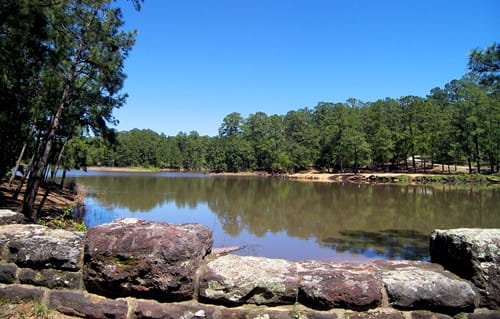
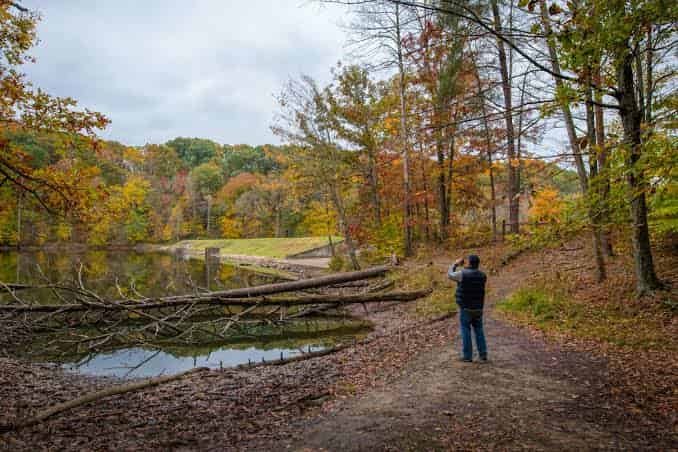
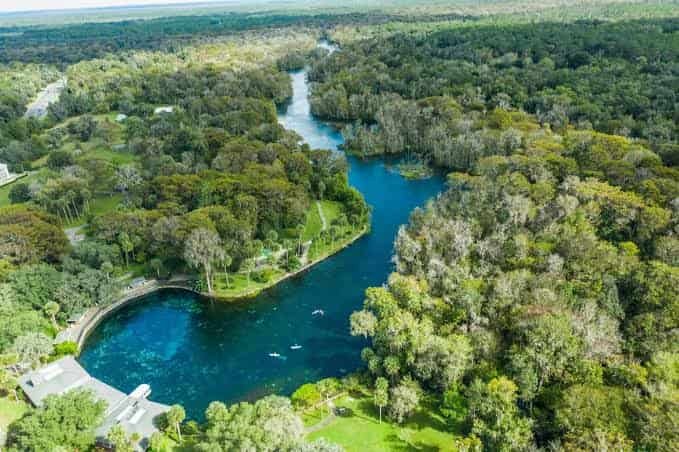
Twenty minutes from downtown Dallas, the skyline gives way to rugged limestone hills, rare tallgrass prairie, and a 7,500-acre lake that makes you forget you’re inside the fourth-largest metro area in the country. Cedar Hill State Park is Texas’s largest urban park, and it manages something genuinely rare: real mountain biking terrain, a working history of 19th-century Texas farm life, and lake access all packed into under 2,000 acres just off the highway.
Here’s what to know before planning a 2026 visit: what it costs, the numbers behind its urban-wilderness setup, and the century-old farm still standing at its center.
Cedar Hill State Park Overview
| Category | Details |
| Location | Cedar Hill, Dallas County, Texas |
| Distance from Dallas | About 10–20 miles southwest |
| Total area | 1,826 acres, on the shore of 7,500-acre Joe Pool Lake |
| Established | Acquired 1982; opened to the public 1991 |
| Day-use entrance fee | $7 per person (children 12 and under free) |
| Overnight camping fee | $5 per person, per day, in addition to campsite fee |
| Campsites | Over 300–350 developed sites |
| DORBA mountain bike trail | Roughly 15 miles across 1,200 acres |
| Fishing license | Not required to fish from shore or a pier within the park |
| 2025 visitation | 375,769 visitors |
Where Cedar Hill State Park Is Located
Cedar Hill State Park sits on the southwest and eastern shore of Joe Pool Lake in Cedar Hill, Texas, roughly 10 to 20 miles southwest of downtown Dallas depending on the specific measurement point. It’s close enough to the Dallas-Fort Worth Metroplex that visitors can genuinely make it a half-day trip, yet the park’s limestone hills and prairie terrain feel more like Texas Hill Country than a suburban green space.
The park sits along FM 1382, and Joe Pool Lake itself is shared with several other public recreation areas managed by the city of Grand Prairie, including Britton Park, Loyd Park, and Lynn Creek Park, giving the broader lake area a genuinely large footprint of combined public access beyond the state park’s own boundaries.
What It Costs to Visit in 2026
Cedar Hill charges a day-use entrance fee of $7 per person, with children 12 and under admitted free. Overnight campers pay a separate $5 per person, per day fee in addition to the standard campsite rate, which varies depending on hookup type and site amenities. Given how close the park sits to a massive metro population, weekend and holiday visits can fill parking and campsites quickly, so booking ahead through the Texas State Parks reservation system is worth doing for anything beyond a casual weekday visit.
One detail Texas state parks handle differently than many other systems: no fishing license is required to fish from shore or from a pier within any Texas state park, including Cedar Hill, a genuine convenience for families wanting to try fishing without buying a separate state license first.
Facts That Make Cedar Hill a Standout Urban Park
Cedar Hill protects some of the last remaining tallgrass prairie in North Texas, a genuinely rare ecosystem that once covered vast stretches of the region before agricultural development eliminated most of it. Alongside the prairie, the park’s rugged limestone hills create terrain unusual for an urban park, supporting the DORBA Trail, a roughly 15-mile mountain biking network built and maintained by the Dallas Off Road Biking Association across 1,200 acres, widely considered one of the best urban mountain biking destinations in the entire state. The trail closes whenever conditions are wet to prevent erosion damage, so calling ahead to check trail status before driving out is genuinely worth doing.
Joe Pool Lake itself supports strong fishing for white crappie, largemouth bass, and catfish, with two lighted fishing jetties extending access for evening anglers and a dedicated perch pond specifically designed for introducing kids to fishing. With more than 300 developed campsites, Cedar Hill offers one of the larger camping capacities among Texas’s urban-adjacent parks, making it a practical option for group trips or extended family camping without leaving the Metroplex entirely.
The History Behind Cedar Hill State Park
Long before it became parkland, this stretch of southwest Dallas County was known as the Cedar Mountains, named for the dense cedar cover across its rugged hills. In 1854, John Anderson Penn settled on this land and established what became a working Texas family farm, one that continued operating for more than a century as agricultural practices shifted dramatically from horse-and-mule labor to mechanized farm equipment by the mid-20th century.
Remnants of the original Penn Farm survive intact within the park today, preserved as the Penn Farm Agricultural History Center, a 25-acre historical site featuring reconstructed and original buildings spanning from the mid-1800s through the mid-1900s. The center is open daily for self-guided tours, with guided options available for school groups and other organized visits, offering a tangible connection to the vanishing tradition of the small Texas family farm.
The state of Texas acquired the surrounding land in 1982, and after nearly a decade of development, Cedar Hill State Park officially opened to the public in 1991, quickly becoming one of the most visited state parks in Texas thanks to its combination of lake access, mountain biking terrain, and proximity to the Metroplex’s massive population base.
Frequently Asked Questions
Q1. Do I need to pay for kids when visiting Cedar Hill State Park?
No, children 12 and under are admitted free for day use. The $7 per-person fee applies only to visitors 13 and older, making it relatively affordable for family day trips.
Q2. Is the DORBA mountain bike trail suitable for beginners?
It’s generally considered intense and rugged terrain built specifically by and for experienced mountain bikers, so casual or first-time riders may find sections challenging. Check current trail conditions before heading out, since the trail closes entirely after rainfall to prevent erosion.
Q3. Can I fish at Cedar Hill without buying a Texas fishing license?
Yes, fishing from shore or from a pier within any Texas state park, including Cedar Hill, does not require a state fishing license, a rule that applies specifically within state park boundaries rather than statewide.
Q4. How far in advance should I book a campsite during peak season?
Given the park’s proximity to the Dallas-Fort Worth Metroplex and its popularity, booking several weeks ahead is wise for summer weekends and holidays, since sites can fill quickly through the Texas State Parks online reservation system.