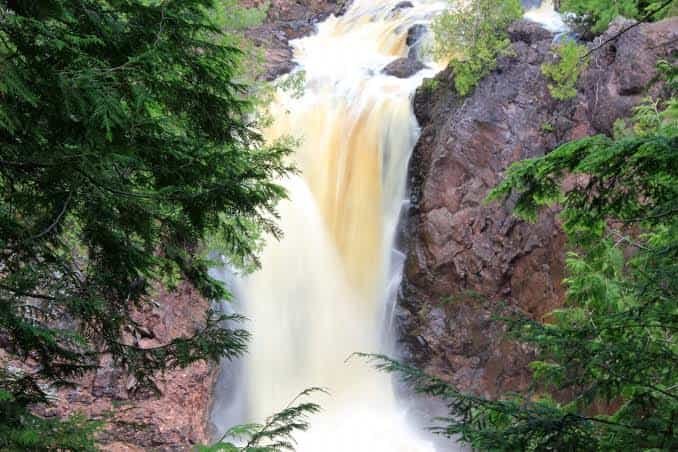
Ancient lava flows carved a deep gorge here more than a billion years ago, and today the Bad River tumbles through it in a series of waterfalls that draw hikers from across the Midwest. Copper Falls State Park near Mellen sits in Wisconsin’s Northwoods, offering some of the state’s most dramatic scenery: an 80-foot-deep gorge, multiple named waterfalls, and historic log buildings built by the Civilian Conservation Corps still standing among the towering pines.
If you’re planning a 2026 visit, here’s what actually matters, from choosing between the park’s two campgrounds to which trail features nearly 250 steps you might want to skip.
Copper Falls State Park at a Glance
| Detail | Information |
| Location | Mellen, WI (northern Wisconsin) |
| Signature Trail | Doughboy’s Nature Trail, 1.7 miles along the Bad River |
| Gorge Depth | ~80 feet |
| Campgrounds | North (32–33 sites) and South (22–23 sites) |
| North Campground | Mostly electric hookups, closer to main trail/falls |
| South Campground | Non-electric, more secluded, includes accessible cabin |
| Camping Fee Range | $20–$30/night |
| Accessible Cabin | South Campground, sleeps up to 4 |
| Swimming | Loon Lake |
| Reservable Sites | 30 (North), 15 (South) |
Choosing Between North and South Campground
Copper Falls offers two genuinely distinct family campgrounds, and picking the right one shapes your entire stay. The North Campground, with 32 to 33 sites, sits within walking distance of the main picnic area, concessions, Doughboy’s Trail, and the Bad River Gorge itself. Most sites here, roughly 25 to 28 depending on the count, include electric hookups, and one site is ADA accessible with a picnic table and fire ring positioned directly across from the restrooms. Amenities include drinking water and vault toilets, with an RV dump station located at the South Campground instead.
The South Campground, with 22 to 23 non-electric sites, sits nestled in a valley between two ridges, offering genuinely more seclusion than the North loop. Four sites here are walk-in only, requiring roughly a 100-yard walk from the parking area, though carts are provided to help shuttle gear. This campground includes a shower building with flush toilets and an RV dump station near its entrance, along with a small, beautiful rustic cabin that’s accessible for people with disabilities, accommodating up to four people with padded beds, electric outlets, and lighting inside.
Camping fees generally run $20 to $30 per night, and given the park’s popularity, reserving your preferred site type well ahead of a summer or fall trip is genuinely worth doing, particularly for the more secluded South Campground sites.
Hiking to the Falls: The Doughboy’s Nature Trail
The park’s signature route, Doughboy’s Nature Trail, runs 1.7 miles following the Bad River past waterfalls and scenic overlooks, including a view from above the 80-foot-deep gorge. Most visitors complete the full loop with photo stops in about 1.5 hours, and the trail is generally well maintained, though it includes a genuine number of stairs in the sections leading down toward the falls themselves, so come prepared for real elevation change rather than a flat, easy stroll.
The Lookout Tower: Worth Skipping in Summer
Here’s a genuinely useful tip from regular visitors: the park’s lookout tower requires climbing roughly 250 steps, and several hikers who’ve made the climb during summer specifically note that once the surrounding trees are fully leafed out, the view from the top is largely obscured. If you’re visiting during peak summer foliage, you might want to skip the tower climb entirely and save your energy for the waterfall trails instead, saving this particular detour for fall or early spring when tree cover is lighter and the view genuinely opens up.
Beyond the Waterfalls: Red Granite Falls and the North Country Trail
For hikers wanting to extend beyond the main Doughboy’s Trail loop, the park’s trail system connects to Red Granite Falls along the North Country Scenic Trail, a considerably longer national trail that passes directly through Copper Falls. This gives more ambitious hikers a genuine way to extend their day beyond the standard waterfall circuit while remaining connected to the same trail network.
Swimming at Loon Lake
For visitors wanting a break from hiking, Loon Lake within the park offers a swimming option distinct from the Bad River itself, which runs through genuinely rugged, rocky gorge terrain unsuitable for casual swimming. Loon Lake gives families a calmer, more controlled water option for cooling off during a summer visit.
Historic CCC Buildings
Scattered throughout the park, historic log buildings constructed by the Civilian Conservation Corps during the 1930s offer a tangible glimpse into Copper Falls’ development history, adding a layer of human history to the park’s already striking natural geology. These structures remain standing today, giving visitors a chance to appreciate both the ancient lava-flow gorge and the more recent Depression-era infrastructure built to make the park accessible.
Cell Service and What to Expect
Cell coverage throughout Copper Falls is genuinely intermittent, varying considerably by specific location within the park. Download any maps or important information before you arrive rather than counting on reliable data access once you’re on the trails or at your campsite.
Firewood and Local Supplies
Firewood is available for purchase at various local vendors near the park, and the small camp store on-site carries basic supplies as well. Given regional firewood transport restrictions common throughout Wisconsin to prevent the spread of invasive pests, buying locally rather than bringing wood from home is the smart, responsible choice regardless of where you’re camping.
Group Camping
For larger gatherings, Copper Falls maintains one group tent camping area accommodating up to 40 people, with its own dedicated parking area, vault toilet building, water fountain, several picnic tables, and a fire ring, giving organized groups a separate space from the standard family campgrounds.
FAQs
Q1. Which campground should I book if I want to be closest to the falls?
Book the North Campground, since it sits within walking distance of the main picnic area, Doughboy’s Trail, and the Bad River Gorge itself. The South Campground offers more seclusion but requires more of a walk or drive to reach the main waterfall viewing areas.
Q2. Is it worth climbing the lookout tower’s 250 steps during a summer visit?
Probably not, based on regular visitor feedback. Once trees are fully leafed out during summer, the view from the top becomes largely obscured, making the climb feel like a lot of effort for limited payoff. Consider saving this specific hike for a fall or early spring visit when tree cover is lighter.
Q3. Can I bring an RV to either campground, and is there a dump station?
Yes, both campgrounds accommodate RV and trailer camping with back-in sites, though length capacity varies by specific site. The RV dump station is located at the South Campground, so plan your route to pass through there if you’re staying at the North Campground and need to empty your tank before leaving.
Q4. Is swimming safe in the Bad River near the waterfalls?
The Bad River runs through genuinely rugged, rocky gorge terrain that isn’t well suited for casual swimming near the falls themselves. Loon Lake within the park offers a much calmer, more appropriate swimming option if cooling off in the water is part of your trip plan.