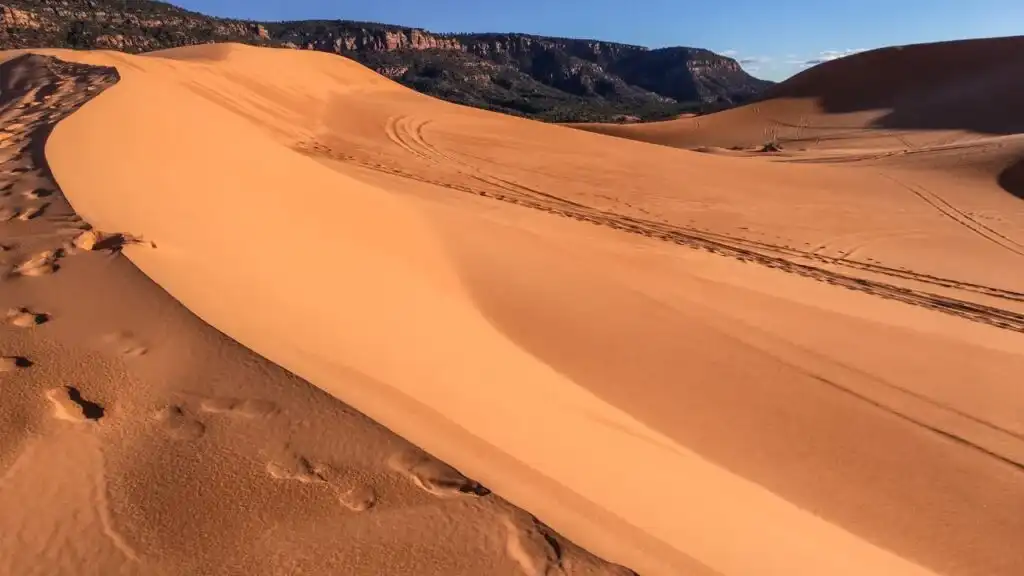
Near Kanab, Utah, sits the only major sand dune field on the entire Colorado Plateau, a 3,730-acre expanse of coral-colored sand that shifts up to 50 feet a year, framed by piñon-juniper forest and red sandstone cliffs. The dunes get their distinctive color from iron oxide eroded out of the surrounding Navajo sandstone, and they’re also the only place on Earth where the rare Coral Pink Tiger Beetle survives, a genuinely tiny habitat range for a species found nowhere else.
Here’s what to know before planning a 2026 visit: what it costs, the ATV riding rules that draw most visitors here in the first place, and the geology behind the park’s unusual pink sand.
Coral Pink Sand Dunes State Park Overview
| Category | Details |
| Location | Kane County, Utah, near Kanab |
| Total area | 3,730 acres |
| Elevation | About 6,000 feet |
| Entrance fee | $15 per vehicle; $10 for Utah seniors 65+ |
| Utah annual pass | $70 (covers day-use at most Utah state parks) |
| Camping (dry sites) | $20–$28 per single site |
| Camping (water/electric sites) | $30–$45 per site |
| Group campsites | $170–$200 per night |
| OHV-accessible dune area | About 90% of the dune field |
| Dune height | Up to 50 feet |
| Hours | Open year-round, 24 hours a day; no holiday closures |
Where Coral Pink Sand Dunes State Park Is Located
Coral Pink Sand Dunes sits in Kane County in far southern Utah, about 12 paved miles off U.S. Highway 89 near the town of Kanab. There’s no lodging within the park itself, so most visitors base themselves in Kanab, a small town that’s become something of a hub for Southern Utah outdoor tourism given its proximity to Bryce Canyon, Zion, Lake Powell, and the Grand Canyon’s North Rim.
The park’s location on the Colorado Plateau, at roughly 6,000 feet elevation, means genuinely varied conditions depending on the season, hot and exposed during summer midday, but often pleasant in early morning or evening, and cold enough in winter that layering matters even in the desert.
What It Costs to Visit in 2026
As of 2026, entrance costs $15 per vehicle, with Utah residents 65 and older paying a discounted $10 rate. Frequent visitors to Utah’s park system can pick up the $70 annual pass, which covers day-use entry to most Utah state parks, a solid value if Coral Pink is just one stop on a broader Southern Utah trip that might also include other state-managed sites.
Camping rates vary by site type: older, no-hookup campsites run $20 to $28 for a single site, while newer sites with water and electric hookups run $30 to $45. Group campsites, accommodating up to five camp units, cost $170 to $200 per night depending on which campground area you book. Reservations can be made from three days up to 16 weeks before your arrival date through Utah State Parks and Recreation, and booking ahead is worth doing given the park’s popularity with both campers and day-trip ATV riders. Sand sleds and boards can be rented on-site at the visitor center for around $25 each, though they must be returned about 30 minutes before closing.
Facts That Make Coral Pink Sand Dunes Geologically Unique
The dunes formed through continual erosion of the surrounding Navajo sandstone cliffs, with iron oxide staining giving the sand its namesake coral-pink hue, a color that shifts noticeably depending on the light and time of day. The entire dune field is genuinely mobile, shifting up to 50 feet annually as wind continually reshapes the landscape, meaning the exact contours of the dunes visitors see can look meaningfully different from one year to the next.
Roughly 90% of the dunes are open to off-highway vehicle use, making this one of the premier ATV and UTV destinations in Utah, with the Sand Highway offering wide-open riding across the main dune field and the South Boundary Trail extending several miles along the eastern edge. A 265-acre conservation area within the park specifically prohibits motorized vehicles to protect the Coral Pink Tiger Beetle and its extremely limited habitat, the only place on Earth this species is known to exist. Beyond the dunes themselves, visitors can access nearby South Fork Indian Canyon to see ancient pictographs, and clear days offer views from the Moquith Mountains stretching toward Kanab Canyon and even the Grand Canyon’s North Rim.
The History Behind Coral Pink Sand Dunes State Park
Long before it became a state park, this landscape held significance for Indigenous peoples in the region, evidenced by the pictographs still visible in nearby South Fork Indian Canyon, left behind by earlier inhabitants who moved through this stretch of the Colorado Plateau. The dunes themselves are a geologically recent feature in relative terms, continuously forming and reshaping over thousands of years as wind erosion breaks down the surrounding sandstone formations.
Utah eventually designated the site a state park to balance two competing priorities: the area’s growing popularity as an off-highway vehicle destination, and the need to protect its unique and genuinely fragile ecosystem, including the endemic tiger beetle population found nowhere else in the world. That balance is reflected directly in the park’s layout today, with the vast majority of the dune field open for OHV recreation while a dedicated conservation zone remains permanently off-limits to motorized vehicles.
Frequently Asked Questions
Q1. Do I need my own ATV, or can I rent one at the park?
The park itself doesn’t rent ATVs directly, but nearby outfitters based in Kanab, including guided UTV tour companies, offer rentals and guided rides, including popular sunset tours. Note that most of these tours don’t include the park’s entrance ticket, so budget for that separately.
Q2. Is the sand actually pink, or is that an exaggeration?
The color is real but can appear more orange or coral depending on lighting conditions and time of day; some visitors expecting a vivid pink are surprised by a more muted, earthy tone in direct midday sun. Early morning or sunset light tends to bring out the color most vividly.
Q3. What’s the best time of day to visit during summer to avoid extreme heat?
Early morning or close to sunset offers the most comfortable conditions, since midday summer sun can make the sand extremely hot underfoot, particularly if you’re sandboarding or sledding barefoot or in sandals.
Q4. Can I drive my regular passenger vehicle into the park, or do I need special equipment?
A standard vehicle works fine for reaching the park, parking areas, and campgrounds, since roads to those areas are paved. You’ll only need an ATV, UTV, or 4WD vehicle if you plan to actually ride out onto the dunes themselves.