Captain William Clark crossed this exact headland in January 1806 with eleven men, searching for a beached whale the Tillamook people had told them about, and wrote in his journal that the view was “the grandest and most pleasing prospects” he’d witnessed on the entire transcontinental expedition. More than two centuries later, that same stretch of Oregon coastline has become one of the most recognizable filming backdrops in American movies, appearing in The Goonies, Twilight, Point Break, and Kindergarten Cop, without losing the wild, windswept character that first stopped Clark in his tracks.
Here’s what to know before planning a 2026 visit: what it costs, the numbers behind its nine miles of dramatic coastline, and the Lewis and Clark history embedded in nearly every trail here.

Ecola State Park Overview
| Category | Details |
| Location | Between Cannon Beach and Seaside, Oregon coast |
| Distance from Portland | About 1.5 hours |
| Total area | About 1,023 acres, spanning 9 miles of coastline |
| Day-use fee | $10 per vehicle (some sources cite $5; confirm current rate at the gate) |
| Oregon State Parks Pass | Accepted (12-month and 24-month options available) |
| Main trail network | 8-mile segment of the Oregon Coast Trail; 2.5-mile Clatsop Loop Trail |
| Longest hike | Lewis and Clark Discovery Trail, 12.2 miles round-trip |
| Camping | Not available — no established campgrounds |
| Name origin | Chinook word “ekoli,” meaning whale |
| Archaeological sites | Bald Point and Ecola Point, listed on the National Register of Historic Places (1997) |
Where Ecola State Park Is Located
Ecola State Park sits just north of Cannon Beach, Oregon, stretching nine miles of coastline up to the town of Seaside, roughly an hour and a half drive from Portland. Access is via Ecola Park Road, reached by heading north on 5th Street from downtown Cannon Beach for about 1.5 miles to the fee station, where the road splits toward Ecola Point on one side and continues two more miles to Indian Beach on the other.
Parking at both Ecola Point and Indian Beach is genuinely limited, and long lines form during the busy season from June through September. Arriving early in the morning or later in the afternoon gives the best chance at finding a spot without a lengthy wait.
What It Costs to Visit in 2026
A day-use fee applies at the entrance fee station, with sources citing rates ranging from $5 to $10 per vehicle depending on when they were last updated, so confirming the current posted rate at the gate or by calling ahead is worth doing before your trip. Oregon State Parks annual permits, available in 12-month and 24-month options, are accepted here and cover admission across Oregon’s broader state park system, a good option for residents or frequent Oregon coast visitors. The Oregon Pacific Coast Passport is another alternative, purchasable at principal state park offices along the coast.
One planning note: Ecola has no established campgrounds, and overnight or car camping isn’t permitted within the park’s boundaries. Nearby options like Wright’s for Camping or Nehalem Bay State Park, both a short drive away, serve visitors wanting to camp in the area while still day-tripping into Ecola.
Facts That Make Ecola State Park a Coastal Standout
Ecola’s dramatic basalt cliffs, old-growth Sitka spruce forest, and sweeping views of sea stacks have made it one of the most filmed locations on the entire Oregon coast. The Goonies sent its young cast biking down the park’s entrance road through these same forests, Point Break staged its climactic final confrontation here, and both Twilight and Kindergarten Cop used the park’s scenery as well, giving it a genuine following among movie location enthusiasts in addition to hikers and photographers.
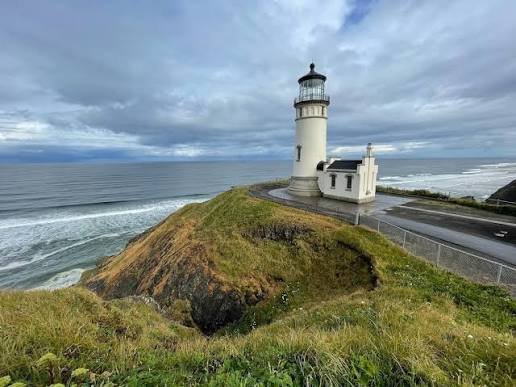
The park’s trail network includes an 8-mile segment of the Oregon Coast Trail and the 2.5-mile Clatsop Loop Trail, a historical interpretive route that follows part of the same path the Corps of Discovery walked in 1806. For more ambitious hikers, the Lewis and Clark Discovery Trail runs a strenuous 12.2 miles round-trip along nearly the entire length of the park, with higher vantage points near Indian Beach offering strong odds for spotting migrating gray whales, particularly during winter and late March. Offshore, the long-abandoned Tillamook Rock Lighthouse, nicknamed “Terrible Tilly” for its dangerous, isolated construction conditions, remains visible from several trail viewpoints, built in 1881 on a rugged basalt rock a mile off the coast.
The History Behind Ecola State Park
The park’s name traces to the Chinook word “ekoli,” meaning whale, given by Captain William Clark himself during his January 1806 expedition through the area. Clark and a party of eleven men crossed Tillamook Head specifically to trade with the local Tillamook people for blubber from a beached whale, and along the way, expedition members encountered burial canoes belonging to the Tillamook tribe near what’s now Indian Beach, a detail reflecting the deep Indigenous history embedded throughout the park’s landscape.
Archaeological evidence at the park’s Bald Point and Ecola Point sites dates human presence here back to as early as 1100 CE, and both sites earned listing on the National Register of Historic Places in 1997, recognizing their significance to Tillamook history well before any European expedition passed through. Today, Ecola State Park is formally included as part of the Lewis and Clark National and State Historical Park, a designation linking it to other federal and state sites across Oregon and Washington associated with the Corps of Discovery expedition, though Ecola charges its own separate entrance fee rather than following any federal fee structure.
Frequently Asked Questions
Q1. Why do sources disagree on whether the entrance fee is $5 or $10?
Fee rates have changed over recent years, and older sources may not reflect the current posted rate. Confirm the exact current fee at the entrance station kiosk or by calling the park directly (503-812-0650) before your visit, especially if budgeting a coastal road trip with multiple park stops.
Q2. Can I camp overnight at Ecola State Park if I’m doing a longer coastal trip?
No, Ecola has no established campgrounds, and overnight or car camping isn’t permitted anywhere within the park’s boundaries. Nearby options like Nehalem Bay State Park or private campgrounds near Cannon Beach serve as alternatives just a short drive away.
Q3. What’s the best time of year to spot gray whales from the park’s trails?
Winter months and late March offer the strongest odds, with higher vantage points near Indian Beach providing some of the best ocean views in the park for spotting migrating whales during that window.
Q4. Are the roads into Ecola ever closed, and how would I find out?
Yes, occasional closures happen due to landslides or maintenance, particularly during Oregon’s rainy season. Calling ahead (503-812-0650) before a wet-season visit is a smart precaution, since road conditions can change with little advance public notice.