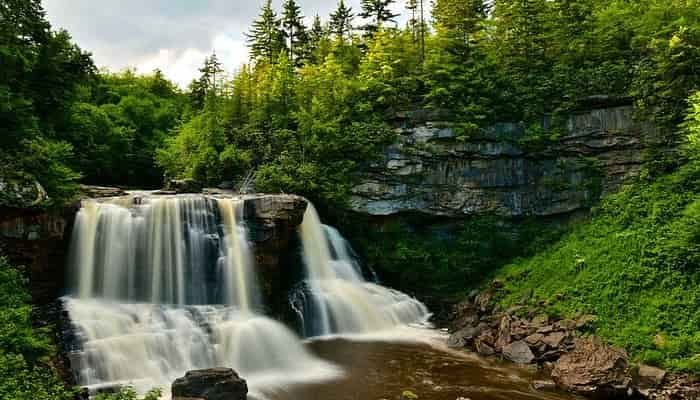
At 3,100 feet on West Virginia’s Allegheny Plateau, the climate here behaves less like the mid-Atlantic and more like New England, complete with over 100 inches of snow most winters. Locals half-jokingly call this corner of Tucker County the “Canada of West Virginia,” and once you’ve seen Blackwater Falls itself, a 57-foot cascade running the color of strong tea from centuries of fallen hemlock and red spruce needles, the comparison starts making sense. This is West Virginia’s most photographed state park, and for good reason: dramatic overlooks, a genuinely large trail network, and four full seasons of distinct outdoor recreation packed into one property.
Here’s what to know before planning a 2026 visit, from winter road closures to cabin booking windows.
Blackwater Falls State Park Overview
| Detail | Information |
| Location | Between Thomas and Davis, Tucker County, WV, off WV-32 |
| Elevation | About 3,100 feet on the Allegheny Plateau |
| Park size | Roughly 2,000+ acres |
| Main waterfall height | 57 feet — the tallest in West Virginia |
| Boardwalk to the falls | 214 steps from the main parking lot |
| Trail mileage | About 20 miles |
| Lodging | 54-room lodge; 26 cabins; 60+ tent/RV campsites |
| Average annual snowfall | Over 100 inches |
| Notable overlooks | Lindy Point, Pendleton Point, Elakala Falls (four cascades) |
| Winter road access | May close, requiring parking along the main road and a roughly 1-mile hike in |
| Pet policy | Dogs welcome on leashes; not permitted in cabins |
Why the Water Runs Amber, and Why It Matters for Your Trip
The park’s namesake color comes from tannic acid released by decaying hemlock and red spruce needles upstream, staining the Blackwater River a distinctive dark amber that photographs beautifully against the surrounding sandstone and greenery. It’s not pollution or sediment, it’s a completely natural process tied to the specific forest composition of this part of the Allegheny Highlands, and it’s part of why photographs of these falls have circulated worldwide for decades.
Understanding this matters practically too: water levels and flow intensity shift noticeably with rainfall and season, so the falls can range from a gentle trickle to a heavier, more dramatic cascade depending on when you visit. If a specific dramatic-flow photo is your goal, aim for spring or shortly after a rain event rather than a dry summer stretch.
Getting to the Falls: The 214-Step Boardwalk and Winter Access Issues
Reaching the main viewing area for Blackwater Falls involves descending a 214-step boardwalk from the main parking lot, a manageable descent for most visitors but one that demands attention on the way back up, especially for anyone with knee or mobility concerns. The boardwalk and stairs can turn slippery after rain in warmer months and icy in winter, so appropriate footwear matters more here than at a flat, paved overlook.
Winter brings an additional wrinkle worth planning around specifically: road closures within the park are possible during heavy snow or ice, and when they happen, visitors may need to park along the main road and hike roughly a mile to reach the falls themselves. This isn’t a hypothetical, it’s a regular winter occurrence at this elevation, so checking current road conditions before a winter trip, particularly after a snowstorm, can save you an unplanned extra mile of walking in cold weather.
Beyond the Main Falls: Elakala Falls, Lindy Point, and Pendleton Point
Blackwater Falls isn’t a one-attraction park, and several other spots are worth building into your itinerary. Elakala Falls, a series of four smaller cascades, sits an easy walk from the lodge and makes for a satisfying add-on hike; the trail crosses a footbridge above the first and tallest of the four falls before continuing downhill past stairs and rocky terrain to the remaining cascades. This section can get slick after rain, so pace yourself and watch your footing rather than rushing through.
Lindy Point and Pendleton Point are two of the park’s best overlooks, delivering sweeping views into the Blackwater Canyon that rival the falls themselves for photographic appeal. Neither requires the same physical commitment as some of the park’s longer trails, making them worthwhile stops even for visitors with limited time or hiking stamina.
Choosing Your Lodging: Lodge, Cabins, or Camping
Blackwater Falls offers a genuinely wide range of overnight options, and each comes with its own booking quirks worth understanding ahead of time. The 54-room lodge suits visitors who want standard hotel-style comfort close to the park’s main attractions, while the 26 cabins, each with wood-paneled interiors, stone fireplaces, and full furnishings, appeal to those wanting a more private, home-like stay.
One detail that surprises first-time cabin renters: during summer, specifically from the second Monday in June through Labor Day, cabins require a minimum one-week booking. Outside that window, shorter stays, including single days or weekend rentals, become available. Reservations can be made up to a year in advance, and given how quickly both the lodge and cabins fill for fall foliage season in mid-October, booking well ahead is genuinely necessary rather than just advisable if you want a specific date during peak color season.
Camping remains the most flexible and affordable option, with more than 60 tent and RV sites available primarily in warmer months. None of the lodging options, including the cabins, permit pets, so if you’re traveling with a dog, plan on either camping or checking current pet policies carefully before booking a room.
Winter Activities: Sledding, Skiing, and What Makes This Park Different
Given the elevation and heavy annual snowfall, Blackwater Falls leans into winter recreation more than most state parks in the region. The park features what’s billed as the longest sledding “magic carpet” lift on the East Coast, a genuine draw for families visiting specifically for snow activities rather than summer hiking. Cross-country skiing trails wind through the same forest that hikers use in warmer months, taking advantage of the reliable snowpack this elevation provides most winters.
Snowshoeing is another popular cold-weather option, and the park’s winter landscape, amber falls partially frozen against snow-covered sandstone, draws its own dedicated following of winter photographers separate from the typical summer and fall visitor crowd.
Practical Details: Cell Service, E-Bikes, and Trail Conditions
A few logistical details are worth knowing before you head out on the trails. Cell service is unreliable throughout much of the park, particularly on longer backcountry hikes, so download offline maps and let someone know your planned route before setting out on anything beyond the main boardwalk area. Class 1 and Class 2 e-bikes are permitted within Blackwater Falls State Park itself, but that permission doesn’t extend into the adjacent Monongahela National Forest, so riders planning to cross between the two need to know exactly where park boundaries end.
Trail conditions vary considerably by season and recent weather, with muddy sections, exposed roots, and uneven terrain common on the park’s more forested routes even outside of winter. A basic level of preparedness, sturdy footwear, water, and awareness of your specific trail’s difficulty rating, goes a long way toward making a Blackwater Falls hike enjoyable rather than a struggle.
Frequently Asked Questions
Q1. Is there an entrance fee to visit Blackwater Falls State Park?
No, West Virginia state parks, including Blackwater Falls, don’t charge a general entrance fee for day visitors. Costs apply only to overnight stays like lodge rooms, cabins, and campsites, along with any specific paid activities or equipment rentals.
Q2. How far in advance should I book a cabin for fall foliage season?
Given how quickly the lodge and cabins fill for mid-October peak color season, booking as early as possible, up to the full year-in-advance window if you have specific dates in mind, is genuinely necessary rather than optional if you want guaranteed availability.
Q3. Can I bring my dog into the lodge or cabins?
No, pets aren’t permitted in either the lodge or the cabins at Blackwater Falls. If you’re traveling with a dog, camping is currently the only overnight option that accommodates pets, though leashed dogs are welcome on the park’s trails and in outdoor areas generally.
Q4. What should I do if roads are closed during a winter visit?
If park roads close due to snow or ice, park along the main road as directed by posted signage and plan for roughly a one-mile walk to reach the falls area. Checking current road conditions before you leave home, especially after a recent snowstorm, helps you plan for this possibility rather than being surprised on arrival.