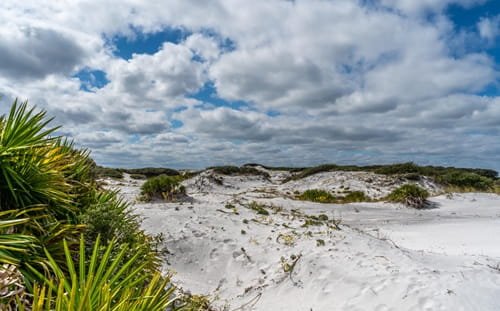
Western Lake looks like an ordinary lake until you learn what it actually is: a coastal dune lake, one of only a few dozen on the entire planet, formed where freshwater meets the Gulf in a delicate, ever-shifting balance. Grayton Beach State Park protects this rare ecosystem alongside a beach that’s been repeatedly named among the best in America, all tucked into a 2,000-acre stretch of Florida’s famous 30A corridor. But this popularity comes with a real logistical catch: the park frequently reaches capacity and closes its gates entirely during peak visitation, turning away even pedestrians and cyclists until space opens back up.
Here’s what to know about capacity closures, camping, and the park’s unusual dune lake before a 2026 visit.
Grayton Beach State Park Overview
| Detail | Information |
| Location | 357 Main Park Rd, Santa Rosa Beach, FL 32459 (Scenic Highway 30A) |
| Park size | About 2,000–2,200 acres |
| Park hours | 8 a.m. until sunset |
| Camping gate closure | 7:15 p.m., with after-hours access by code for registered campers |
| Camping fee | $30/night plus tax, $6.70 reservation fee; RV utility fee $7/night (not for tents) |
| Camping reservation window | Up to 11 months in advance |
| Nature trails | Over 4 miles through pine flatwoods, dunes, and salt marsh |
| Cabins | Located in a separate unit about 1 mile west of the main park, with its own beach access |
| Capacity closures | Occur intermittently during high visitation; day visitors turned away until reopening |
| Best off-peak visiting window | October — warm Gulf water, thinner crowds |
Why the Park Sometimes Closes Its Gates Entirely
This is the single most important logistical detail for anyone planning a day-trip visit here. Grayton Beach frequently reaches full capacity during high-visitation periods, and when that happens, the park closes temporarily, sometimes for several hours at a stretch, until enough visitors leave to free up space. Unlike some parks where this only affects vehicle entry, Grayton Beach’s closures extend to day visitors broadly, including pedestrians and bicyclists, who aren’t permitted to enter until the park reopens.
Campers with existing reservations are the one exception, they’re admitted even during a capacity closure, which makes an overnight stay a genuinely reliable way to guarantee access during the park’s busiest stretches. If you’re planning a summer day trip specifically, arrive early rather than assuming you can simply walk or bike in at any hour, since a midday arrival on a busy weekend carries real risk of finding the gates temporarily closed.
Western Lake: The Park’s Genuine Rarity
Beyond the beach itself, Western Lake is what makes Grayton Beach scientifically distinctive. Coastal dune lakes like this one exist in only a handful of places worldwide, and Western Lake ranks as the second-largest coastal dune lake in the entire Florida Panhandle. These lakes form through a delicate interplay of freshwater accumulation and periodic connection to the Gulf, and seasonal rises in the lake’s water level occasionally cause the surrounding dune to breach naturally, mixing lake and Gulf water in a process that shapes the park’s unique brackish ecosystem.
This mixing supports genuinely unusual wildlife and plant communities you won’t find at a typical sandy beach park, and paddling or kayaking on Western Lake offers a completely different experience than a standard Gulf swim, worth building into your visit if you want to see more of what makes this park special beyond the shoreline.
Fishing in Two Completely Different Water Types
Grayton Beach offers a genuinely unusual fishing setup: anglers can cast for saltwater species directly in the Gulf of Mexico, then walk a short distance to fish the fresh and brackish waters of Western Lake for an entirely different set of species. This dual-environment fishing access is rare within a single park boundary, and it’s worth packing gear for both if fishing is part of your trip plan, rather than assuming one type of tackle covers your whole visit.
An artificial reef called Turtle Reef sits roughly 800 feet offshore, accessible by kayak, and offers a solid snorkeling destination for visitors wanting more underwater interest than the standard beach swim provides.
Camping: Booking Early and Understanding the Fees
Camping at Grayton Beach runs $30 a night plus tax, with a nonrefundable $6.70 reservation fee applied regardless of stay length, and an additional $7 nightly utility fee for RV sites specifically (tent campers skip this charge). Reservations open a full 11 months in advance, and given the park’s reputation, sites fill quickly, particularly for summer dates when demand for 30A beach access peaks across the entire region.
If you’re set on camping during peak summer season, booking as close to the 11-month opening as possible is genuinely necessary rather than optional. The campground itself isn’t directly beachfront, but sites sit close enough that beach access remains a short walk, and campers benefit from being admitted even during the park’s periodic capacity closures that turn away day visitors.
The Cabins: A Separate Piece of the Park Entirely
In an arrangement that catches some visitors off guard, Grayton Beach’s rental cabins aren’t located within the main park boundary at all. They sit in a separate unit roughly one mile west of the main park entrance, on their own beachfront parcel with independent beach access. If you’re booking a cabin stay, don’t expect to simply drive to the main park entrance, confirm the correct address and access route for the cabin unit specifically, since it operates somewhat independently from the main day-use and camping areas.
Wildlife: Nesting Birds and Respecting Buffer Zones
Grayton Beach’s dune areas serve as nesting habitat for least terns and snowy plovers, both species that depend on undisturbed sandy areas during breeding season. The park posts buffer zones around active nesting sites, and respecting these boundaries matters genuinely for the survival of these birds, not just as a courtesy rule. If you notice roped-off dune sections during your visit, particularly in spring and early summer, these are active nesting protections rather than arbitrary restrictions, so keep pets and beach activities well clear of the marked areas.
When to Visit for Fewer Crowds
Summer delivers the warmest Gulf water and the heaviest crowds, meaning the highest likelihood of encountering a capacity closure and the tightest camping availability. October offers a genuinely appealing alternative: Gulf water remains warm well into the month, while crowds thin out considerably compared to peak summer, making it a local favorite window for a quieter, less logistically stressful visit.
Frequently Asked Questions
Q1. What happens if I arrive and the park has reached capacity?
Day visitors, including pedestrians and cyclists, are turned away until the park reopens, which can take several hours. Campers with existing reservations remain exempt from this closure and are admitted regardless of current capacity status.
Q2. Where exactly are the rental cabins located?
The cabins sit in a separate unit about one mile west of the main park entrance, with their own independent beach access. Confirm you’re heading to the correct address for your cabin reservation rather than the main park gate.
Q3. Can I fish in both the ocean and the dune lake during the same visit?
Yes. Grayton Beach offers saltwater fishing directly in the Gulf and separate freshwater/brackish fishing in Western Lake, a genuinely unusual combination within one park. Pack gear suited to both environments if fishing is a priority for your trip.
Q4. When is the best time to visit if I want to avoid capacity closures?
October offers a strong balance of warm Gulf water and thinner crowds compared to peak summer months, reducing your odds of encountering a capacity closure while still delivering good swimming conditions.