Long before Din Tai Fung and San Gabriel Valley dim sum became a Los Angeles food-tourism staple, Monterey Park was where it started. This small city just east of downtown LA became known as “Little Taipei” in the 1980s as waves of immigrants from Taiwan, Hong Kong, and mainland China settled here, and it’s still considered the birthplace of the region’s now-famous Chinese food scene. But Monterey Park offers more than a meal — an observatory tucked inside a city park, a genuine art museum, and a surprising amount of hiking for a place surrounded by strip malls.
Here’s what makes a 2026 visit worthwhile and how to plan around it.
Monterey Park Visitor Snapshot
| Detail | Information |
| Location | San Gabriel Valley, Los Angeles County, California |
| Known for | Birthplace of the San Gabriel Valley’s Chinese food scene; nicknamed “Little Taipei” |
| Signature food experience | Dim sum, Cantonese banquet halls, Taiwanese breakfast spots, xiaolongbao |
| Notable museum | Vincent Price Art Museum (East Los Angeles College) |
| History museum | Monterey Park Historical Museum |
| Hiking option | Edison Trails Park, a compacted-soil trail beneath power transmission lines |
| Hidden gem | Garvey Ranch Park, home to the city’s own public observatory |
| Memorial site | American and Chinese World War II Memorial Monument |
| Distance from downtown LA | About 8–10 miles east |
| Best for | Food-focused day trips, museum visits, casual hiking |
Why Monterey Park Is a Food Destination First
If there’s one reason to build a trip around Monterey Park, it’s the food. This is where San Gabriel Valley’s now-legendary Chinese dining scene took root, starting with the area’s first authentic Chinese restaurants decades ago and expanding through waves of immigration from Hong Kong, Taiwan, and later mainland China. The result today is a dense concentration of options: sprawling Cantonese banquet halls built for weekend dim sum carts and wedding parties, Taiwanese breakfast diners with old-school counter seating, and newer Sichuan and Shanghai-style restaurants reflecting more recent immigration patterns.
Unlike a lot of food-destination neighborhoods that cater primarily to tourists, much of Monterey Park’s dining scene still serves its own longtime residents first, which means menus, service style, and pricing lean toward authenticity over polish. If you’re planning a food-focused day here, come hungry and be ready to wait in line at the more popular spots — some of the city’s best-known restaurants have built reputations partly on genuinely long queues.
The Vincent Price Art Museum and Other Cultural Stops
Named for the actor and serious art collector Vincent Price, this museum sits on the campus of East Los Angeles College and houses a collection that includes Mesoamerican art and, at times, Egyptian artifacts on loan from LA County institutions. It’s a smaller, quieter alternative to the county’s bigger art museums, making it a good stop for visitors who want a genuine collection without the crowds of a major downtown institution.
For a more local, historical angle, the Monterey Park Historical Museum covers the city’s development, while the American and Chinese World War II Memorial Monument offers a reflective, less-visited stop honoring shared wartime history between American and Chinese service members — a detail that connects directly to the city’s identity as a hub for Chinese American life in Los Angeles.
Garvey Ranch Park’s Surprising Observatory
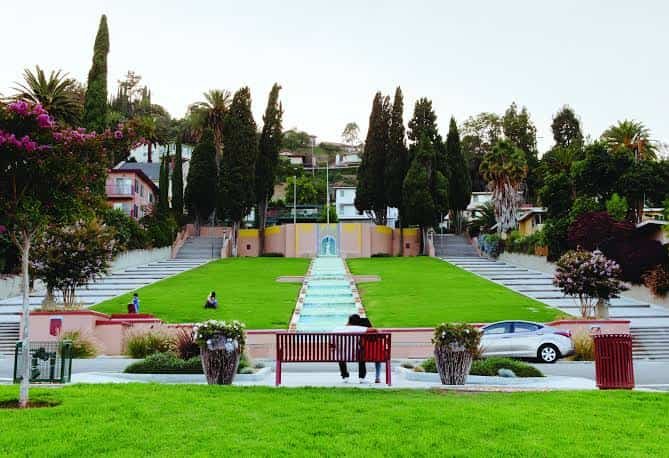
Most visitors don’t expect a city park in a dense LA suburb to include its own observatory, but Garvey Ranch Park does exactly that. It’s a genuinely under-the-radar spot even among locals, and it’s worth building into an evening itinerary if stargazing or a quieter park visit fits your schedule. Combined with its walking paths and green space, Garvey Ranch works well as a slower-paced counterpoint to a day spent mostly eating and museum-hopping.
Hiking in the Middle of Suburban LA
Edison Trails Park is Monterey Park’s answer to outdoor recreation, running beneath Southern California Edison’s power transmission lines through the Repetto Hills. The trail itself is compacted soil rather than pavement, easy to walk when dry, with a moderate elevation gain that doesn’t require serious hiking experience. At roughly a half-mile one way, or a mile round trip, it’s a manageable stop for visitors wanting fresh air between meals rather than a full outdoor excursion, and it offers a different view of the region than the strip malls most people associate with the area.
Frequently Asked Questions
Q1. Do I need a car to visit Monterey Park, or is it accessible from downtown LA without one?
A car is strongly recommended. While Monterey Park sits close to downtown LA, its restaurants and attractions are spread across a car-dependent suburban layout, and public transit options are more limited than what’s available within the city core.
Q2. What’s the best way to plan a food-focused visit without overloading on one meal?
Consider spacing out a dim sum brunch, a mid-afternoon snack stop at a Taiwanese breakfast spot or noodle counter, and a Cantonese dinner rather than trying to fit everything into a single sitting. Portions at many of the city’s banquet-style restaurants run large, so sharing plates across a group works well if you want to sample more than one dish.
Q3. Is Edison Trails Park suitable for young kids or casual walkers?
Yes, generally. The trail has some elevation gain but isn’t steep, and the compacted soil surface is easy to manage when dry, though it can get slippery after rain. It suits casual walkers and families better than serious hikers looking for a challenging route.
Q4. Is there anything to do in Monterey Park besides eating, or is it purely a food destination?
There’s more than food, though dining is the strongest draw. The Vincent Price Art Museum, Garvey Ranch Park’s observatory, the historical museum, and Edison Trails Park all give visitors reasons to extend a day trip beyond restaurant-hopping alone.