If you’ve visited Blue Spring State Park before and are planning to just show up again this year, stop and read this first: the rules have changed. Starting July 15, 2026, every day-use visitor needs a reservation to get through the gate, a real shift for a park that’s long operated on a first-come, first-served basis. That’s on top of the winter manatee crowds this Orange City spring is already famous for, so 2026 planning here looks different than it did even a year ago.
Here’s the full picture, from the new booking requirement to what’s actually open in the spring run right now.
Blue Spring State Park Overview
| Detail | Information |
| Location | 2100 W. French Ave., Orange City, FL 32763 |
| Park hours | 8 a.m. to sundown, 365 days a year |
| Vehicle entrance fee | $6 (2–8 occupants); $4 single-occupant vehicle; $2 pedestrians/cyclists |
| New day-use reservation program | Begins July 15, 2026; booking window opens July 8, 2026 |
| Swimming season | April 1 through November 14 |
| Manatee refuge season | Mid-November through March (spring closed to all water activity) |
| Spring output | Over 100 million gallons of 72°F water daily |
| Campsites | 51 sites, RVs up to 40 feet, water/30-amp electric hookups |
| Camping reservation window | 11 months for Florida residents, 10 months for non-residents |
| Cabins | 6 two-bedroom cabins in an oak hammock |
| Hiking | 4.5-mile Pine Island Trail |
The Reservation Change Everyone Needs to Know About
This is the single biggest shift for 2026. Blue Spring has always been prone to filling up and closing its gates temporarily, especially on weekends and during manatee season, but entry itself never required booking ahead for regular day visitors. That changes on July 15, 2026, when a new day-use reservation system takes effect, with the advance booking window opening a week earlier on July 8. Once it’s live, walking up without a reservation simply won’t get you in, regardless of how early you arrive.
Campers and guests with boat tour reservations aren’t affected by this change and continue to be admitted even during a capacity closure — it’s specifically day-use pedestrian and vehicle traffic that now requires advance booking. If a Blue Spring day trip is on your calendar for this year, check the park’s official reservation page as soon as the window opens rather than assuming you can decide the morning of.
Manatee Season: When to Go and What You Won’t Be Able to Do
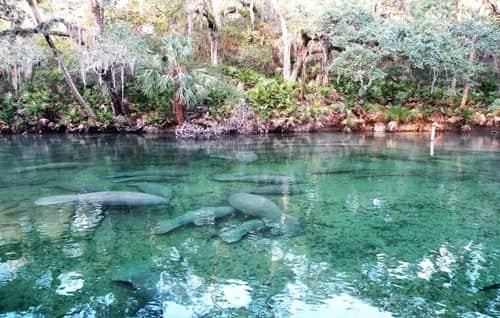
Blue Spring is arguably the best place in Florida to see wild manatees, and the reason comes down to simple biology: the spring holds a constant 72-degree temperature year-round, which turns it into a critical warm-water refuge once the St. Johns River cools off. From roughly mid-November through March, hundreds of West Indian manatees gather here, with a record single-day count of 729 individuals logged in a recent winter census.
That protection comes with a tradeoff for visitors. During manatee season, the entire spring run closes to all water activities — no swimming, snorkeling, diving, or boating — to keep the animals undisturbed. You can still view them extensively from the boardwalk and observation platforms along the run, which is actually the preferred way to see manatees anyway, since swimming with or approaching them is prohibited even outside the winter closure. Arrive early on weekend mornings during peak manatee months; the park regularly reaches capacity and temporarily closes, sometimes for hours at a stretch.
Swimming Season: What’s Open From April Through November
Once the manatees move on for the season, the spring run reopens for swimming, snorkeling, kayaking, and paddleboarding, running from April 1 through November 14 as of the current 2026 schedule. Reopening dates can shift slightly if manatees linger later into spring than usual, so it’s worth a quick check before planning a swim-focused trip in late March or early April.
Tubing runs during summer months only, with single tubes starting around $7 for the first hour and double tubes closer to $10. Kayaking is available on the St. Johns River itself, though paddling directly in the spring run is restricted during the busiest midday hours, generally 10 a.m. to 5 p.m., to keep the swimming area clear.
Camping and Cabins at Blue Spring
The campground offers 51 sites with water and 30-amp electric hookups, accommodating RVs up to 40 feet, along with two modern bathhouses and a dump station. Six two-bedroom cabins sit nearby in a shaded oak hammock for visitors who’d rather skip the tent. Florida residents can book campsites up to 11 months ahead, while non-residents get a 10-month window — worth knowing if you’re traveling from out of state and assumed the timelines were identical.
Guests with a confirmed camping reservation are admitted to the park even during a day-use capacity closure, which makes camping a genuinely useful workaround for anyone determined to visit during the park’s busiest manatee-season weekends.
Frequently Asked Questions
Q1. Do I need a reservation to visit Blue Spring State Park right now, or only after July 15, 2026?
Reservations become mandatory for all day-use visitors starting July 15, 2026. Before that date, the park operates on its previous capacity-closure system, though arriving early is still strongly recommended.
Q2. Can I swim with the manatees at Blue Spring?
No. Swimming, diving, or approaching manatees is prohibited year-round, and the rule is strictly enforced. Viewing from the boardwalk and observation areas is the correct way to experience them.
Q3. Is Blue Spring open during the winter manatee season?
Yes, the park itself stays open daily year-round. Only the spring run’s water activities close during manatee season — hiking, the boardwalk, picnic areas, and manatee viewing remain fully accessible.
Q4. What happens if the park reaches capacity while I’m en route?
Day-use visitors without a reservation may be turned away or asked to wait during a capacity closure, which can last several hours. Visitors with camping or boat tour reservations are still admitted, which is one reason overnight stays are worth considering for peak-season visits.