Real, 113-million-year-old dinosaur tracks sit in a Texas riverbed you can wade into and touch — but here’s the catch nobody mentions until they’ve already made the drive: whether you can actually see them depends entirely on how much it’s rained lately. Dinosaur Valley State Park, just west of Glen Rose, preserves genuine footprints left by Acrocanthosaurus and Sauroposeidon in the limestone bed of the Paluxy River, and track visibility shifts with river conditions on almost a weekly basis.
If a 2026 trip here is on your calendar, checking current conditions before you go matters more than at almost any other park on this list.
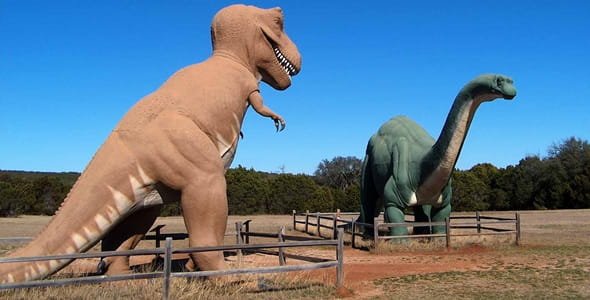
Dinosaur Valley State Park Overview
| Detail | Information |
| Location | 1629 Park Rd 59, Glen Rose, TX 76043 (about 90 minutes southwest of Fort Worth) |
| Park size | 1,524 acres |
| Day-use fee | $8 per person, ages 13+; 12 and under free |
| Gate hours | 6 a.m. to 10 p.m. daily; no re-entry after 10 p.m. |
| Park HQ office hours | 8:30 a.m. to 4:30 p.m. |
| Track age | Approximately 113 million years old |
| Track-makers | Acrocanthosaurus (carnivore) and Sauroposeidon (Texas’s state dinosaur) |
| Number of public track sites | Five main sites, river conditions permitting |
| National recognition | National Natural Landmark since 1968 |
| Trail mileage | Over 20 miles |
| Busy season | March through November |
| Annual closures | Park-wide closures during scheduled hunts, typically early December and mid-January |
Why Track Visibility Is the First Thing to Check
This is the detail that separates a great Dinosaur Valley trip from a disappointing one. The dinosaur tracks sit directly in the Paluxy River’s limestone bed, which means visibility depends entirely on water level and clarity at the time of your visit. After heavy rain, tracks can be fully submerged and invisible; during drier stretches, they’re often clearly exposed and walkable. The park actively posts current status, typically phrased as tracks being “visible,” “partially visible,” or “not visible,” along with whether trails are open to all activities or restricted to foot traffic only.
Before making the drive, check the park’s current alert status or call the park office directly. Showing up without checking is the single most common way visitors leave disappointed, since the tracks are the entire reason most people visit in the first place.
What the $8 Fee Gets You, and When the Park Closes Entirely
Admission runs a flat $8 per person for anyone 13 and older, with children 12 and under free — a straightforward structure compared to some parks’ tiered vehicle pricing. Day-use visitors can stay until the 10 p.m. gate closure, but re-entry isn’t permitted after that point, so plan your day accordingly if you’re stepping out for dinner in Glen Rose and intending to come back.
One detail worth flagging for anyone planning a winter visit: the park closes entirely during scheduled hunts, typically a stretch in early December and another in mid-January. During these windows, the park shuts down completely from the evening before the hunt begins until midday on the final day, affecting both day-use and camping access. If your trip falls anywhere near these dates, double-check the current year’s exact hunt schedule before booking anything.
The Five Track Sites and What Makes Them Different
Dinosaur Valley features five main public track sites, each offering a different look at how these animals moved through what was once a marshy coastal environment. The most striking is the “Ballroom” site, where multiple sets of Sauroposeidon tracks head in different directions, suggesting these massive herbivores may have traveled in social groups, possibly for protection from predators like Acrocanthosaurus.
Sauroposeidon tracks themselves are worth knowing what to look for: rounded and elephant-like but on a dramatically larger scale, since these animals could reach 70 to 110 feet in length and weigh up to 60 tons. Their sheer weight often pressed tracks several layers deep into ancient sediment, which is part of why paleontologists still study this site to understand how such enormous creatures supported their own mass.
Beyond the Tracks: What Else Fills a Visit
Even on a day when river conditions hide the tracks, Dinosaur Valley offers more than 20 miles of hiking trails, riverside camping, swimming holes, and scenic overlooks across its 1,524 acres of Texas Hill Country terrain. Families who make the trip specifically for dinosaur tracks and find them obscured by high water still generally leave satisfied with the hiking and river access alone, provided expectations are set going in.
The park gets genuinely crowded during its March-through-November busy season, particularly on spring and summer weekends, so reservations for both day-use entry and camping are strongly recommended rather than optional if you’re visiting during peak months.
Frequently Asked Questions
Q1. What should I do if the dinosaur tracks aren’t visible when I arrive?
Check the park’s posted status before you leave home rather than after arriving — current conditions are typically available by phone or on the park’s official channels. If tracks are underwater on your visit date, the park’s trails, swimming areas, and camping still make for a worthwhile day, but it’s better to know in advance than be surprised.
Q2. Can I touch or walk on the dinosaur tracks?
Yes, when they’re exposed and accessible, visitors can walk in the riverbed near the tracks. Just use care around the site, since these are genuine, irreplaceable fossil impressions rather than replicas.
Q3. Do I need a reservation for a same-day visit, or can I just show up?
Day-use entry doesn’t strictly require a reservation, but the park frequently reaches capacity during busy season, especially weekends between March and November. Booking a day pass in advance is the safer bet if your visit date falls during that window.
Q4. Is the park open year-round, or are there seasonal closures I should know about?
The park operates daily, gate hours 6 a.m. to 10 p.m., but closes completely during scheduled hunt periods, typically in early December and mid-January. Confirm the specific dates for the year you’re visiting before finalizing any winter trip plans.