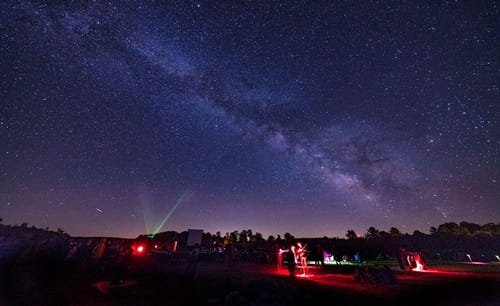
On the darkest nights at Cherry Springs, the Milky Way glows bright enough to cast a visible shadow. That’s not exaggeration for effect, it’s a genuine, documented feature of one of the darkest places in the eastern United States, rated Bortle 2 on a scale where 1 is the absolute darkest sky achievable on Earth. This 82-acre park in rural Potter County has built an international reputation entirely around what happens after sunset, and understanding its two-tier stargazing system, plus a couple of twice-yearly events that book out lodging for miles, matters before you make the drive.
Here’s what to know about the viewing areas, permits, and star parties before a 2026 trip.
Cherry Springs State Park Overview
| Detail | Information |
| Location | 4639 Cherry Springs Road, Coudersport, PA (Potter County) |
| Park size | 82 acres |
| Elevation | About 2,300 feet on the Allegheny Plateau |
| Dark sky rating | Bortle 2 — among the darkest in the eastern U.S. |
| Dark Sky designation | PA’s first Dark Sky Park (2000); International Dark Sky Park (2007) |
| General park admission | Free (all Pennsylvania state parks) |
| Night Sky Public Viewing Area | Free, short-term (a few hours), no overnight stays |
| Overnight Astronomy Observation Field | Registration, permit, and user fee required; open all night |
| Campground season | Mid-April through mid-October, 30 rustic sites |
| Twice-yearly star parties | Cherry Springs Star Party (June); Black Forest Star Party — book lodging 4–5 months ahead |
| Pets | Not allowed on the Astronomy Field, in the campground, or at public night sky programs |
Two Viewing Areas, Two Very Different Experiences
This is the core distinction to understand before planning your visit. Cherry Springs splits its stargazing infrastructure into two separate areas on opposite sides of Route 44, and picking the right one depends on how serious your stargazing plans actually are.
The Night Sky Public Viewing Area, on the northern side of Route 44, is a former airport runway offering 360-degree unobstructed sky views, ideal for visitors who want a few hours of stargazing without committing to an overnight stay. White light is technically permitted here, though a red filter or cover on your flashlight is recommended to preserve everyone’s night vision. This area doesn’t allow overnight stays and requires no registration or fee.
Across the road sits the Overnight Astronomy Observation Field, the premier destination for serious astronomers with equipment who want to observe all night. This area requires registration and a permit before setting up, obtained at the contact station across from the field, or via a self-pay envelope from the bulletin board if the station is unstaffed when you arrive. Critically, white light is prohibited here entirely, all lights must have a red filter or be fully shielded, a stricter standard than the public viewing area given the serious astrophotography and observation work that happens on this side.
Registering for the Overnight Astronomy Field
If you’re planning to use the Overnight Astronomy Observation Field, arrive during daylight hours to park and set up before dark, then register at the contact station and display your permit on your vehicle dash for the duration of your stay. If a ranger isn’t present when you arrive, self-registration envelopes are available at the designated bulletin board with written instructions, so a closed contact station doesn’t mean you can’t use the field, just that you’ll handle payment and registration yourself.
Following the specific Overnight Astronomy Observation Field Permit Conditions is required, and rangers do check for proper light discipline, so bring red-filtered equipment rather than assuming standard camping gear will pass muster on this side of the road.
The Rustic Campground: A Middle Ground
For casual overnight stargazers who don’t need the strict lighting discipline of the Astronomy Field but want more than a few hours of viewing, the park’s Rustic Campground offers 30 sites suited to tents and small RVs under 20 feet, with no hookups or generators permitted, though potable water is available. This campground operates seasonally, generally mid-April through mid-October, and reservations can be made up to 11 months in advance.
Unlike the Astronomy Field, there are no strict lighting restrictions in the Rustic Campground, though red filters are still recommended as a courtesy to fellow campers interested in stargazing, and keeping campfires as small as possible helps preserve everyone’s night vision and viewing conditions.
Star Parties: Why You Need to Book Months Ahead
Twice a year, Cherry Springs hosts major star parties that draw hundreds of professional and amateur astronomers from across the region. The Cherry Springs Star Party, held each June by the Astronomical Society of Harrisburg, and the Black Forest Star Party both culminate in public viewing events featuring high-powered telescopes and astronomy talks from experts. These events are genuinely popular, and lodging or campsites in the surrounding area book out 4 to 5 months in advance for these specific dates.
If experiencing one of these star parties is your goal, mark your calendar well ahead of time and book accommodations the moment reservations open, rather than waiting until closer to the event and finding everything within driving distance already full.
Checking the Sky Before You Drive Out
Given that stargazing here depends entirely on clear conditions, checking the Cherry Springs Clear Sky Chart before committing to a visit is a genuinely useful step most casual visitors skip. Look for dark blue squares in the “Cloud Cover” row, indicating clear skies ideal for viewing. Since even a perfectly clear day can turn cloudy by nightfall in this part of the Allegheny Plateau, checking conditions as close to your planned visit time as possible gives you the most accurate read.
Once you’re actually out under the sky, patience matters too: your eyes need roughly 15 minutes to fully adjust to the darkness before the full range of stars becomes visible, so resist the urge to give up on a seemingly unremarkable sky within the first few minutes.
Wildlife and Practical Precautions
Cherry Springs sits deep within Susquehannock State Forest, and wildlife sightings are genuinely common, including black bears, deer, coyotes, bobcats, turkey, and elk in southern Potter County specifically. Hearing owls hooting or the occasional coyote howl after dark is part of the standard experience here rather than a rare occurrence, a reminder of just how remote this park remains despite its international reputation.
Frequently Asked Questions
Q1. Do I need a permit just to stargaze for a few hours during the day trip?
No. The Night Sky Public Viewing Area requires no registration or fee and is specifically designed for casual, short-term stargazing without an overnight commitment. Permits are only required for the separate Overnight Astronomy Observation Field.
Q2. Can I bring my dog to Cherry Springs?
Pets aren’t allowed on the Astronomy Observation Field while it’s in use, in the campground, or at public night sky programs. Check current policy for other general park areas if you’re specifically planning to bring a pet along.
Q3. How far in advance should I book if I want to attend one of the star parties?
Reserve lodging or a campsite 4 to 5 months ahead of the Cherry Springs Star Party or Black Forest Star Party specifically, since accommodations in the surrounding area book out quickly for these dates.
Q4. What if I show up and it’s cloudy?
Check the Cherry Springs Clear Sky Chart before you make the drive, since conditions can shift quickly in this part of Pennsylvania. If clouds roll in unexpectedly during your visit, the park’s daytime hiking trails and scenic overlooks in the surrounding Susquehannock State Forest still offer a worthwhile visit independent of night sky conditions.