District 8 in “The Hunger Games: Mockingjay – Part 1” wasn’t built on a soundstage. It’s a genuine Civil War ruin, a five-story textile mill burned by General Sherman’s troops in 1864, sitting just 15 miles from downtown Atlanta in Sweetwater Creek State Park. The same crumbling brick walls have since appeared in “Avengers: Infinity War,” making this 2,549-acre park a recurring backdrop for Georgia’s booming film industry. But the ruins aren’t fully open to explore on your own, and understanding exactly what you can and can’t access matters before you make the trip.
Here’s what to know about the mill ruins, trail options, and parking fees before your 2026 visit.
Sweetwater Creek State Park Overview
| Detail | Information |
| Location | 1750 Mt. Vernon Road, Lithia Springs, GA (about 15 miles from Atlanta) |
| Park size | 2,549 acres |
| Parking fee | $5 per vehicle; free with Georgia State Parks annual pass |
| Trail mileage | Over 15 miles |
| Signature trail | Red Trail (History Trail), 1 mile one-way to the mill ruins |
| Mill ruins access | Exterior freely viewable; interior closed except guided hikes and special events |
| Reservoir | George Sparks Reservoir, 215 acres — fishing, canoeing |
| Office hours | 9 a.m.–5 p.m. |
| Filming credits | The Hunger Games: Mockingjay – Part 1; Avengers: Infinity War |
The Mill Ruins: What You Can Actually See
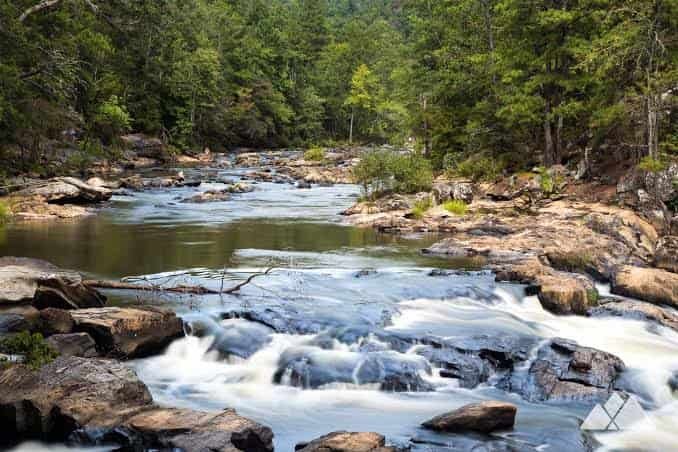
This is the park’s biggest draw and the detail most first-time visitors need clarified before arriving. The New Manchester Manufacturing Company ruins, a five-story textile mill that once employed more than 130 workers producing cloth for Confederate uniforms before Sherman’s troops burned it in 1864, remain genuinely impressive from the outside, with crumbling brick walls rising dramatically from the forest floor alongside Sweetwater Creek’s rushing rapids.
However, the interior of the ruins is closed to general visitors for safety and preservation reasons, accessible only through guided hikes (both public and private), school field trips, or special events. If walking through the mill’s interior specifically is part of your bucket list, check with the Visitor Center for the current guided hike schedule rather than assuming you can simply wander in on a standard visit. For most visitors, the exterior views from multiple angles along the Red Trail deliver the photogenic payoff that made this spot a Hollywood location in the first place.
The Red Trail: Easy Start, Tougher Finish
The Red Trail, also called the History Trail, is the recommended route for first-time visitors and the most heavily used trail in the park, largely because it’s the shortest path to the mill ruins while showcasing the creek valley’s best scenery. The first half-mile is relatively easy, following the free-flowing stream to the ruins themselves, with historical markers and benches along the way. A history guide for this section is available at the Interpretive Center if you want deeper context on the New Manchester mill town’s rise and Civil War-era demise.
Beyond the mill, the trail continues downstream for another half-mile toward the Sweetwater Falls area, and this second stretch is considerably more strenuous due to genuinely rocky, uneven terrain along the bluffs above the rapids. If you’re only up for the easier first half, you’ll still see the mill ruins and creek views; continuing further rewards you with dramatic overlooks of nearly a mile of white-water rapids, but demands sturdier footwear and more careful footing.
Parking and Fees: A Modest Cost With a Real Catch
Admission to Sweetwater Creek runs $5 per vehicle, waived if you hold a Georgia State Parks annual pass. This is a genuinely small cost for what the park offers, but the practical catch is parking availability rather than price: the park’s popularity, especially on weekends, means lots fill up, and arriving before 10 a.m. genuinely improves your chances of finding a spot close to your intended trailhead rather than needing to drive between multiple parking areas.
If you’re camping or staying overnight, know that the daily ParkPass fee is charged once per vehicle for the duration of your stay regardless of how many nights you’re there, but parking itself isn’t automatically bundled into a camping reservation, so budget for it separately.
George Sparks Reservoir: Fishing and Paddling Beyond the Mill
Beyond the Civil War history and Hollywood cameos, the 215-acre George Sparks Reservoir offers a genuinely different side of the park, popular with anglers and a scenic spot for canoeing or simply feeding ducks along the shoreline. Fishing supplies are available at the park’s bait shop, though hours vary, so calling ahead is worth doing if fishing gear is central to your visit plans rather than something you’re bringing yourself.
The Visitor Center: More Than a Gift Shop Stop
Sweetwater Creek’s Visitor Center holds genuine distinction as one of the most environmentally responsible buildings in the country, LEED-NC Platinum certified, alongside its practical function housing exhibits on the area’s history and wildlife, trail maps, snacks, and a renovated gift shop. A window-lined event room seating 40 people is available for rental, alongside seven picnic shelters and a larger group shelter seating up to 150, though capacity limits and reservation details require calling the park directly before booking any of these spaces.
Trail Difficulty: Matching Your Route to Your Fitness Level
With over 15 miles of trails ranging from easy history walks to genuinely challenging all-day hikes through diverse Georgia forest, Sweetwater Creek offers real range depending on how much time and physical effort you want to commit. Beyond the Red Trail, White and Yellow Trail options wind through broader forest views and scenic overlooks, generally offering gentler terrain than the rockier stretches near the falls. If you’re visiting with a mixed-ability group, planning a route that lets some members turn back at the mill ruins while others continue toward the falls is a practical way to accommodate different comfort levels within a single outing.
Frequently Asked Questions
Q1. Can I walk inside the mill ruins on a regular visit?
No. The interior is closed to general visitors for safety and preservation reasons, accessible only through guided hikes, school field trips, or special events. Check with the Visitor Center for current guided hike schedules if interior access matters to your trip.
Q2. What time should I arrive to guarantee parking on a weekend?
Aim to arrive before 10 a.m., since the park’s popularity, particularly for the Red Trail and mill ruins, means lots fill up quickly on weekends and can leave latecomers driving between multiple parking areas to find a spot.
Q3. Is the full Red Trail suitable for casual hikers, or is it too strenuous?
The first half-mile to the mill ruins is relatively easy and suitable for most fitness levels. The second half-mile beyond the mill toward Sweetwater Falls is considerably more strenuous due to rocky, uneven terrain, so plan your turnaround point based on your group’s comfort with more demanding footing.
Q4. Do I need a reservation to fish at George Sparks Reservoir?
No reservation is needed for general fishing, though the on-site bait shop has variable hours, so call ahead if you’re relying on the park to supply gear or bait rather than bringing your own equipment.